








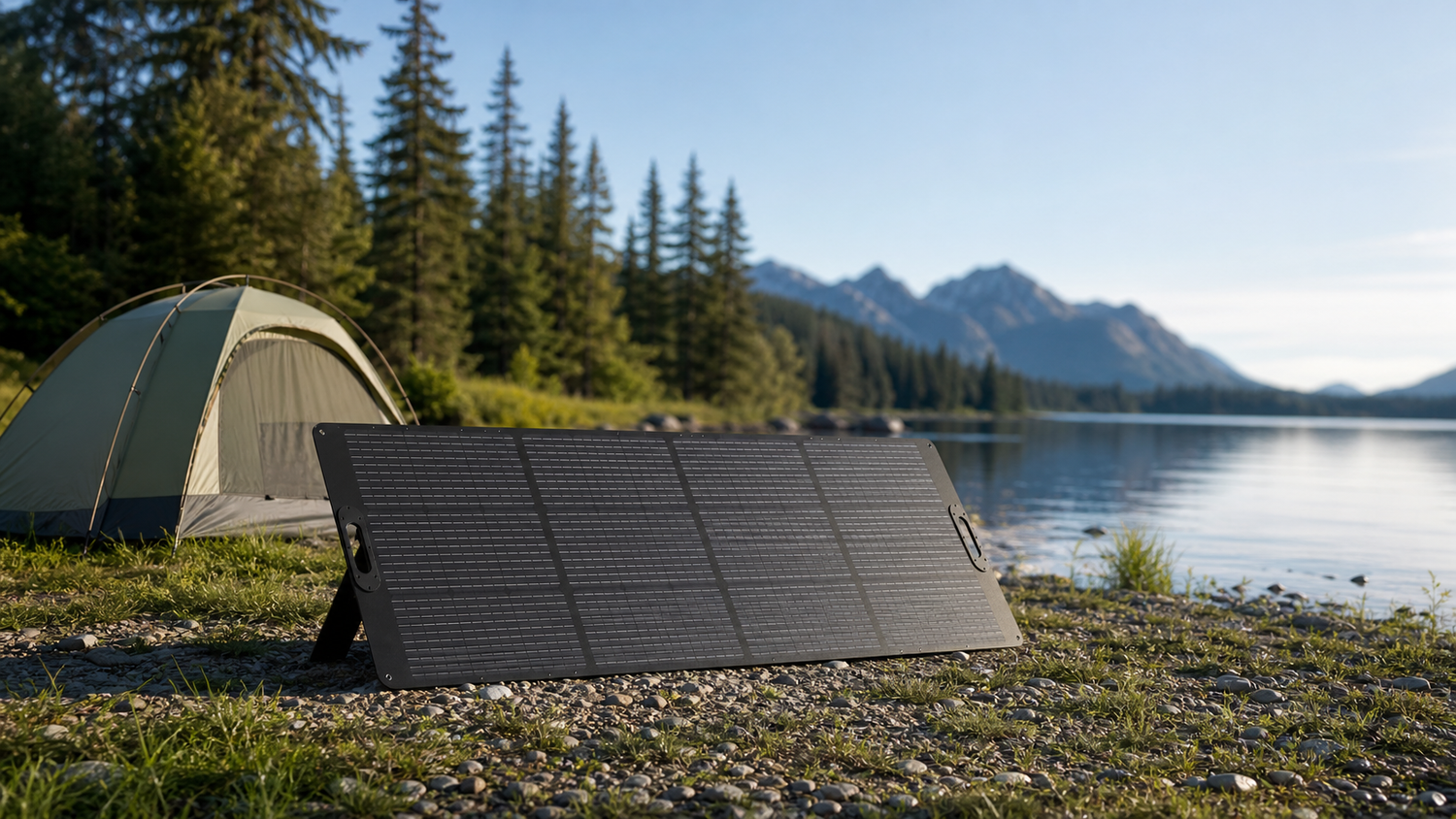
Portable solar power panels let you recharge compatible batteries away from a wall outlet, but the wattage printed on a panel is not the wattage you should expect every hour. The right choice depends on your daily energy use, available sunlight, panel placement, weather, connector compatibility, and how much equipment you are willing to carry.
This guide explains how to size a portable panel, estimate charging time, compare 100W and 240W options, and use the equipment safely in Canadian outdoor and backup-power conditions.
How Portable Solar Panels Work
A photovoltaic panel converts sunlight into direct-current electricity. A portable folding panel then sends that power through its cable and connector to a compatible charge controller or power station. The battery stores the energy so it can be used later through USB, DC, or AC outputs.
Panel wattage is a laboratory-rated maximum, not a guaranteed field result. Natural Resources Canada maps show that solar potential varies by location and season, while NREL’s PVWatts model accounts for irradiance, temperature, weather, orientation, and system losses. In practical use, partial shade, clouds, a poor angle, heat, snow, dirt, and conversion losses can all reduce output.
How to Choose Panel Wattage
Start with the energy you need each day, measured in watt-hours (Wh). Multiply each device’s wattage by the number of hours it runs, then add the results. A 40W device used for five hours consumes about 200Wh. Add a margin for charging and conversion losses.
| Typical use | Approximate daily energy need | Practical panel range | What to expect |
|---|---|---|---|
| Phones, lights, cameras | 100–250Wh | 100W | Compact setup with slower battery recovery |
| Weekend camping, laptops, small fridge | 300–700Wh | 200–300W | Better balance of portability and charging speed |
| Extended off-grid use or backup charging | 700Wh or more | 400W or more, if supported | More collection area, weight, and setup space |
Always compare the panel’s voltage, current, connector, and total wattage with the solar-input limits of the battery system. A larger panel is not useful if the receiving device cannot accept its voltage or current.
OUPES 100W vs. 240W Portable Solar Panel
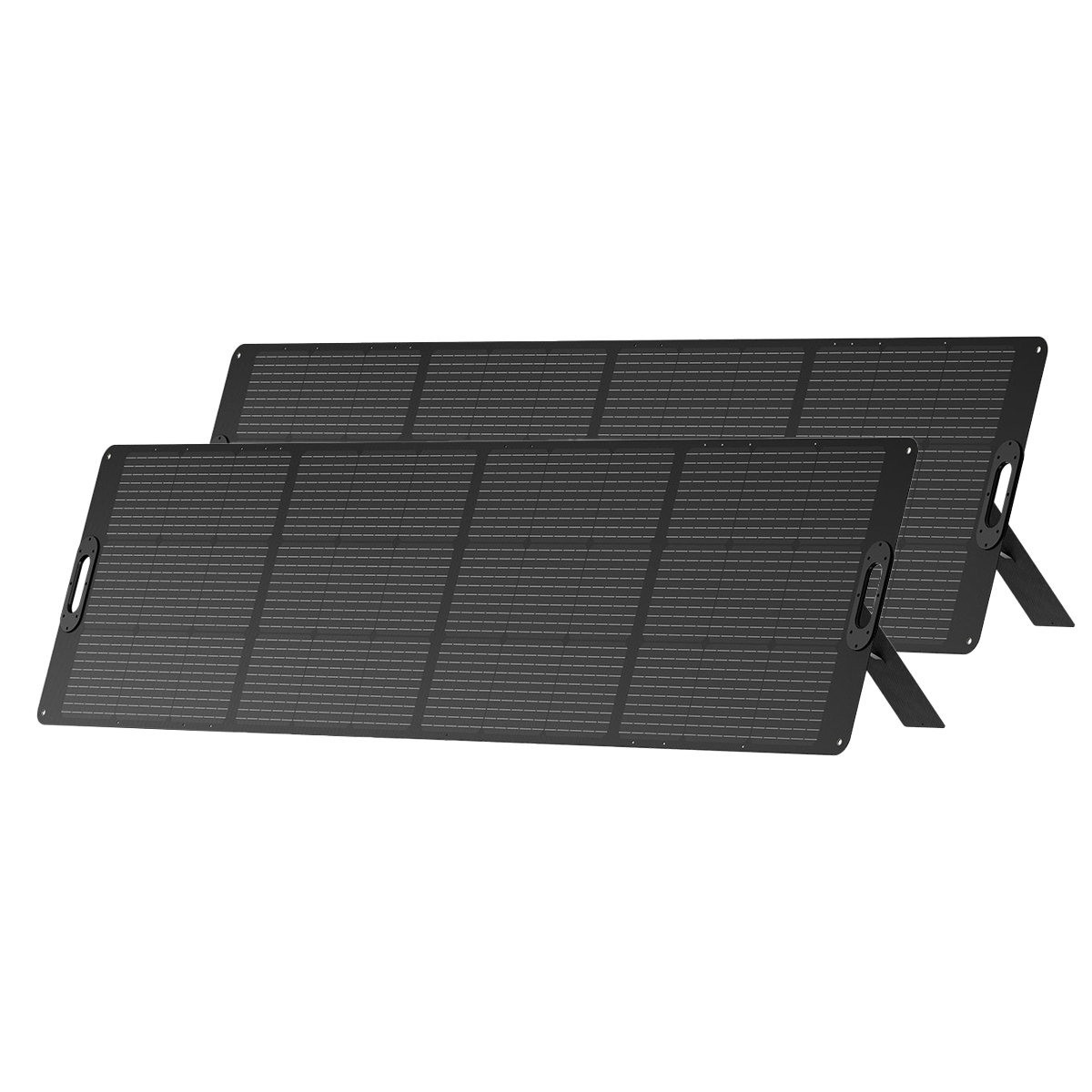
The OUPES 100W Portable Solar Panel is the lighter option for modest energy needs. The OUPES 240W Portable Solar Panel provides more rated power for faster charging, but it is larger and heavier.
| Specification | OUPES 100W | OUPES 240W |
|---|---|---|
| Maximum power | 100W | 240W |
| Cell type / efficiency | Monocrystalline / ≥23% | Monocrystalline / ≥23% |
| Operating voltage | Vmp 20.5V; OCV 24.4V | Vmp 20.5V; OCV 24.6V |
| Operating current | Imp 4.88A; Isc 5.27A | Imp 11.7A; Isc 12.3A |
| Connector | MC4 | MC4 |
| Weight | 12.48lb (5.7kg) | 18.48lb (8.4kg) |
| Folded dimensions | 21.8 × 23.2 × 1.9in | 26.1 × 23.2 × 2.4in |
| Protection / warranty | IP65 / 12 months | IP65 / 12 months |
IP65 indicates resistance to dust and water jets under the rating’s test conditions; it does not mean the panel should be submerged or left exposed in severe weather. OUPES instructs users to move these panels indoors during rain or extreme weather and dry them thoroughly if they become wet.
How to Estimate Daily Energy Output
Use this planning formula:
Daily energy (Wh) = panel rating (W) × peak-sun hours × system factor
A conservative system factor of 0.65–0.80 accounts for angle, temperature, cable losses, the charge controller, and changing sunlight. For example, a 240W panel receiving four peak-sun hours at a 70% system factor could produce approximately:
240W × 4 hours × 0.70 = 672Wh per day
This is an estimate, not a promise. Peak-sun hours are not the same as total daylight hours, and output may change significantly between a clear summer day and a cloudy winter day.
| Panel rating | 2 peak-sun hours | 4 peak-sun hours | 6 peak-sun hours |
|---|---|---|---|
| 100W | 140Wh | 280Wh | 420Wh |
| 240W | 336Wh | 672Wh | 1,008Wh |
| 480W | 672Wh | 1,344Wh | 2,016Wh |
How to Estimate Charging Time
For a rough charging estimate, divide the energy that must be replaced by the expected solar input:
Charging time (hours) = energy to replace (Wh) ÷ effective solar input (W)
If a 1,000Wh battery needs 800Wh and a 240W panel averages 168W after applying a 70% system factor, the estimate is 800 ÷ 168, or about 4.8 peak-sun hours. Battery-management tapering, the station’s solar-input limit, temperature, and interruptions may make the actual time longer.
How to Get Better Solar Output
- Place the entire panel in direct sunlight; shade on even one section can reduce output.
- Point the panel toward the sun and adjust the kickstand as the sun moves.
- Keep the surface clean and free of leaves, snow, and dust.
- Allow airflow behind the panel because high cell temperature can reduce performance.
- Use the supplied cable where possible and avoid unnecessary extension length.
- Check the receiving device’s display to compare input before and after repositioning.
Canadian Weather and Seasonal Limits
Solar energy is available across Canada, but output varies by latitude, region, season, cloud cover, and snow. Natural Resources Canada publishes solar-resource information showing these geographic differences. In winter, shorter days and a lower sun angle reduce the available charging window, while cold batteries may also have charging restrictions.
Do not assume that cold, clear weather guarantees full rated output. Keep the panel free of snow, reposition it for the lower winter sun, and follow the battery manufacturer’s permitted charging-temperature range.
Connectors and Compatibility
Both OUPES panels above use MC4 connectors, but connector shape alone does not prove electrical compatibility. Confirm the receiving device’s permitted open-circuit voltage, current, wattage, polarity, and required adapter before connecting anything.
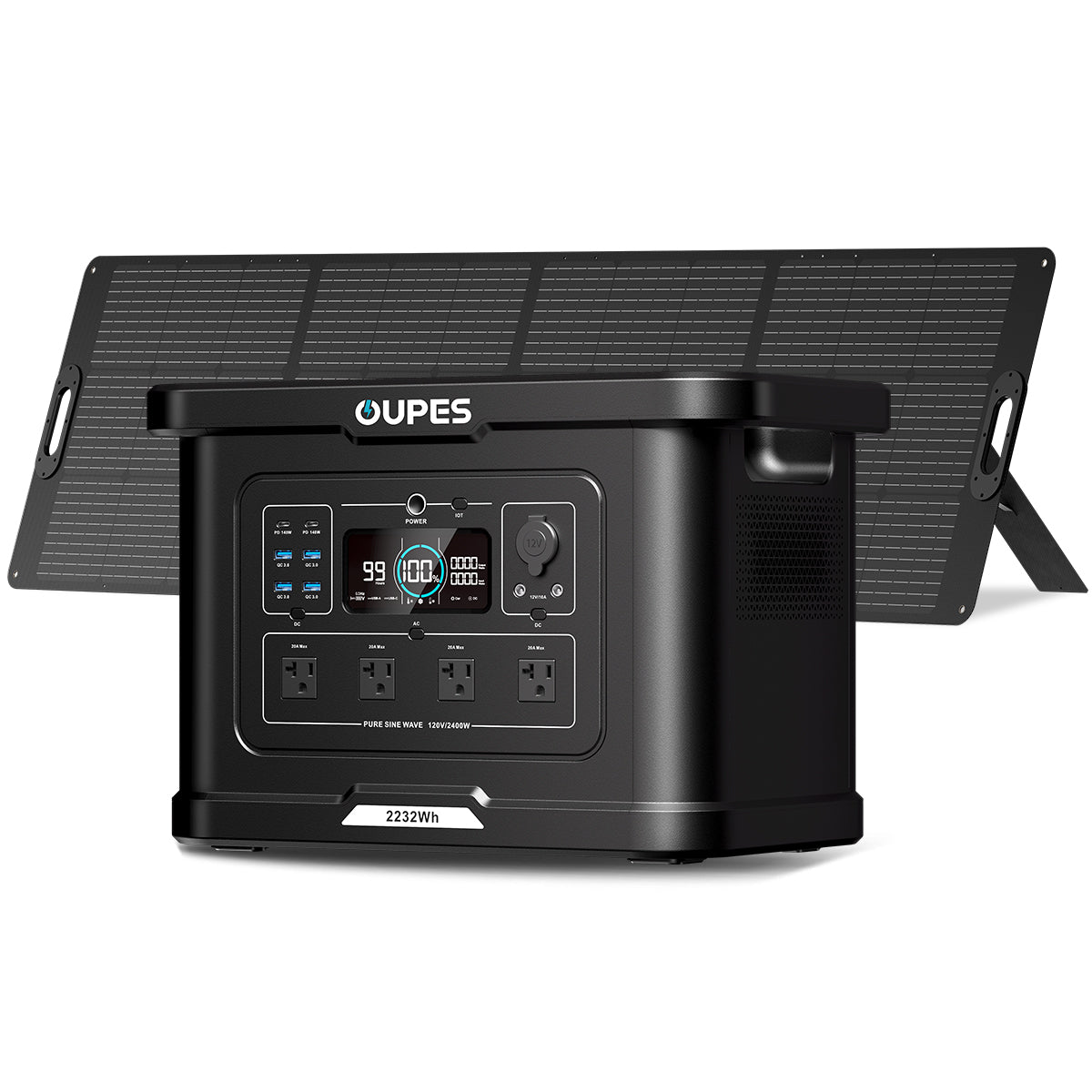
Do not combine panels in series or parallel unless the manual explicitly permits the resulting voltage and current. Disconnect the charging input before changing adapters or wiring. For a simple matched system, a preconfigured solar generator kit can reduce compatibility guesswork.
Which OUPES Option Fits Your Use Case?
Choose the 100W panel when packed size and lower weight matter more than recovery speed. It fits phone, lighting, camera, and light laptop charging plans, provided the connected battery accepts its electrical specifications.
Choose the 240W panel for weekend camping, larger batteries, small refrigeration loads, or backup charging where a 100W panel would recover energy too slowly. A two-panel 480W arrangement may suit higher daily demand only when the connected system supports the combined input.
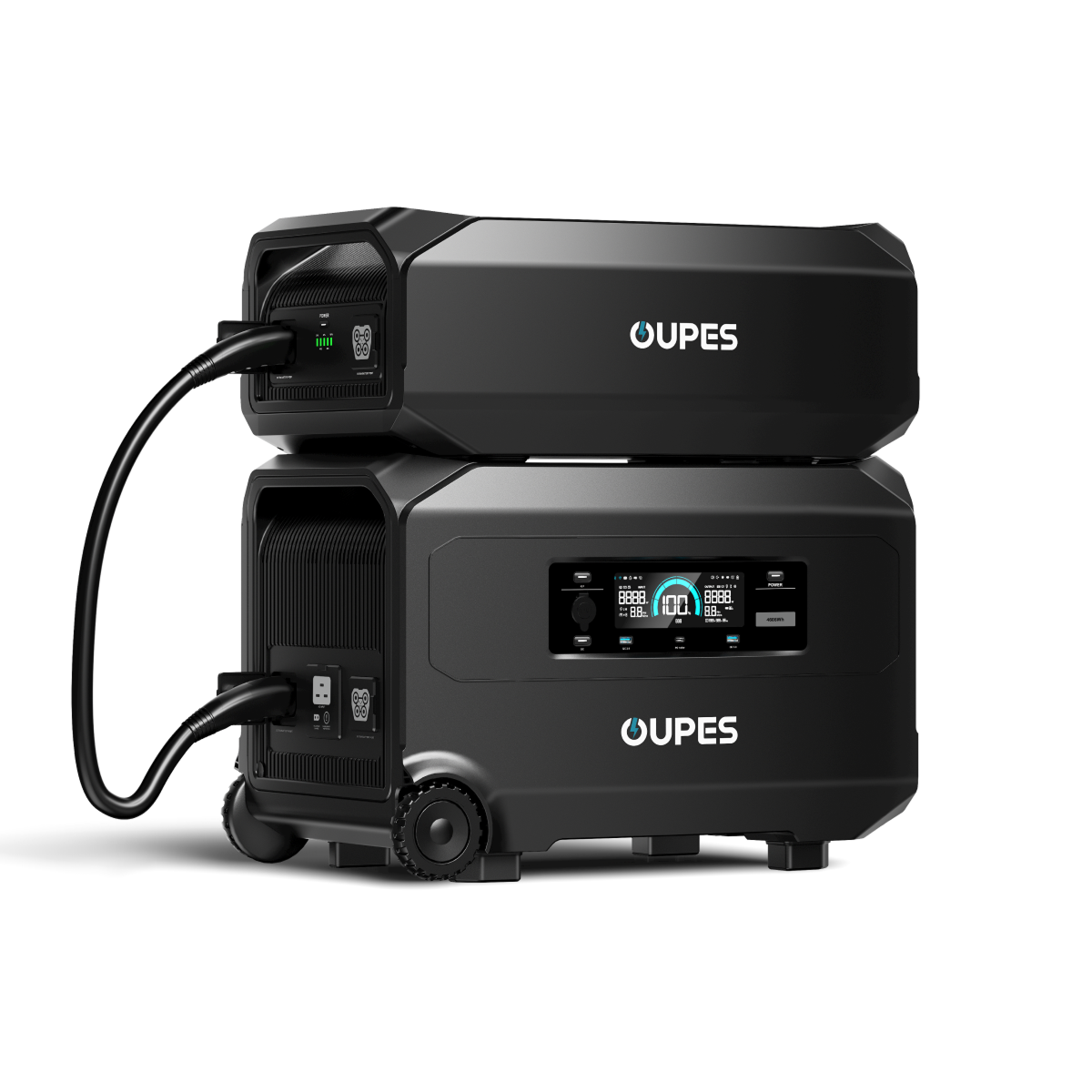
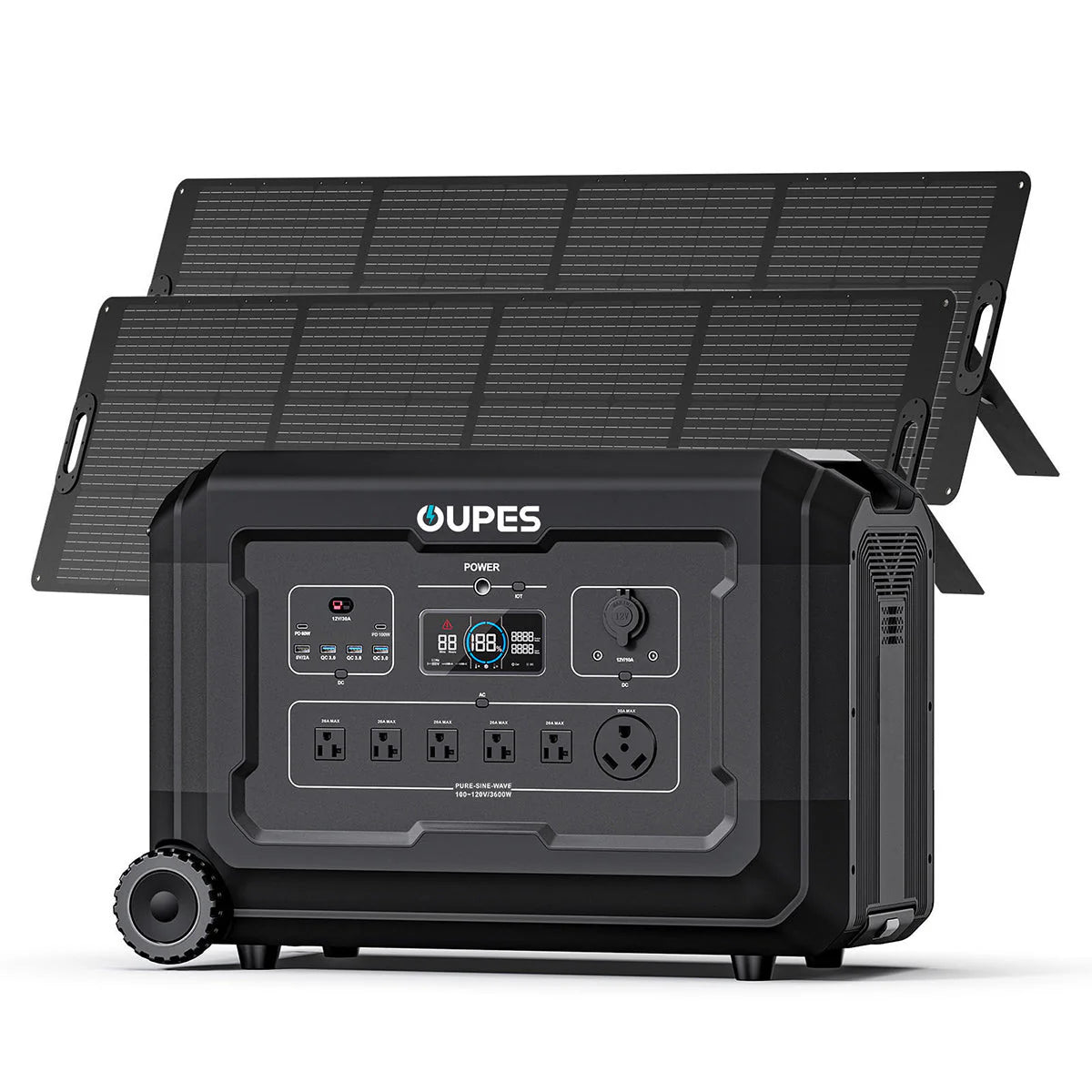
If you still need a battery, compare the panel with an appropriately sized portable power station. OUPES also offers matched packages such as the Mega 1 + 240W Solar Panel Kit and Mega 3 + 2 × 240W Solar Panel Kit. Select by daily energy demand, required AC output, solar-input limit, portability, and expected weather—not panel wattage alone.
Portable Solar Panel Safety Checklist
- Read the manuals for both the panel and receiving device.
- Inspect cables, insulation, connectors, and adapters before every setup.
- Keep electrical connections dry and off wet ground.
- Do not use damaged, loose, overheated, or incorrectly polarized connectors.
- Secure the panel against wind and keep walkways clear of cables.
- Do not exceed voltage, current, or wattage input limits.
- Use a qualified technician for permanent building or grid-connected work.
The Canadian Centre for Occupational Health and Safety warns that wet conditions increase electrical-shock risk and recommends following manufacturer guidance and using appropriately certified equipment. A portable panel connected to a battery is not a substitute for a code-compliant permanent solar installation.
Final Verdict
For light charging and easier transport, 100W is a sensible starting point. For faster battery recovery and more demanding camping or backup use, 240W offers a stronger balance, provided the receiving system accepts its voltage and current. Calculate daily watt-hours first, use realistic sunlight and loss assumptions, and leave room for poor weather. The best panel is the one that safely replaces your expected energy use without exceeding the limits of the equipment it charges.
Frequently Asked Questions
How much power does a 100W portable solar panel produce in a day?
At four peak-sun hours and a 70% system factor, a 100W panel may produce about 280Wh. Actual output depends on sunlight, shade, angle, temperature, cleanliness, cables, and the charge controller.
Is a 240W panel enough for camping?
It can be suitable for phones, laptops, lighting, and some small-fridge setups, but calculate the devices’ total daily watt-hours. Loads, weather, and the battery’s solar-input limit determine the result.
Can portable solar panels work on cloudy days?
Yes, but output can be substantially lower. Plan with conservative estimates and keep enough stored energy for periods when solar charging cannot replace daily consumption.
Can I leave an IP65 portable panel outside in the rain?
Do not treat IP65 as permission for unattended exposure or immersion. Follow the product manual; OUPES advises moving its portable panels indoors during rain or extreme weather and drying them thoroughly if wet.
Can I connect two portable solar panels together?
Only if the panel and receiving-device manuals allow it. Series wiring raises voltage, while parallel wiring raises current. The combined values must remain within every component’s limits.
Why is my solar panel producing less than its rated wattage?
Rated power is measured under standardized test conditions. Clouds, haze, partial shade, poor angle, hot cells, snow, dirt, cable losses, and input limits commonly reduce real-world output.
Sources and Methodology
- NREL PVWatts Calculator — solar production modelling, weather variability, orientation, temperature, and loss assumptions.
- Natural Resources Canada: Solar Energy Resource Potential in Canada — Canadian solar irradiance and insolation context.
- Canadian Centre for Occupational Health and Safety: Electrical Safety — wet-condition and general electrical-safety guidance.
- OUPES 100W Portable Solar Panel and OUPES 240W Portable Solar Panel — product specifications checked July 28, 2026.
All solar yield and charging-time figures are planning estimates. Real results vary with sunlight, panel orientation, temperature, shade, snow, cable and conversion losses, battery condition, charging controls, and product input limits.

Leave a comment
This site is protected by hCaptcha and the hCaptcha Privacy Policy and Terms of Service apply.