








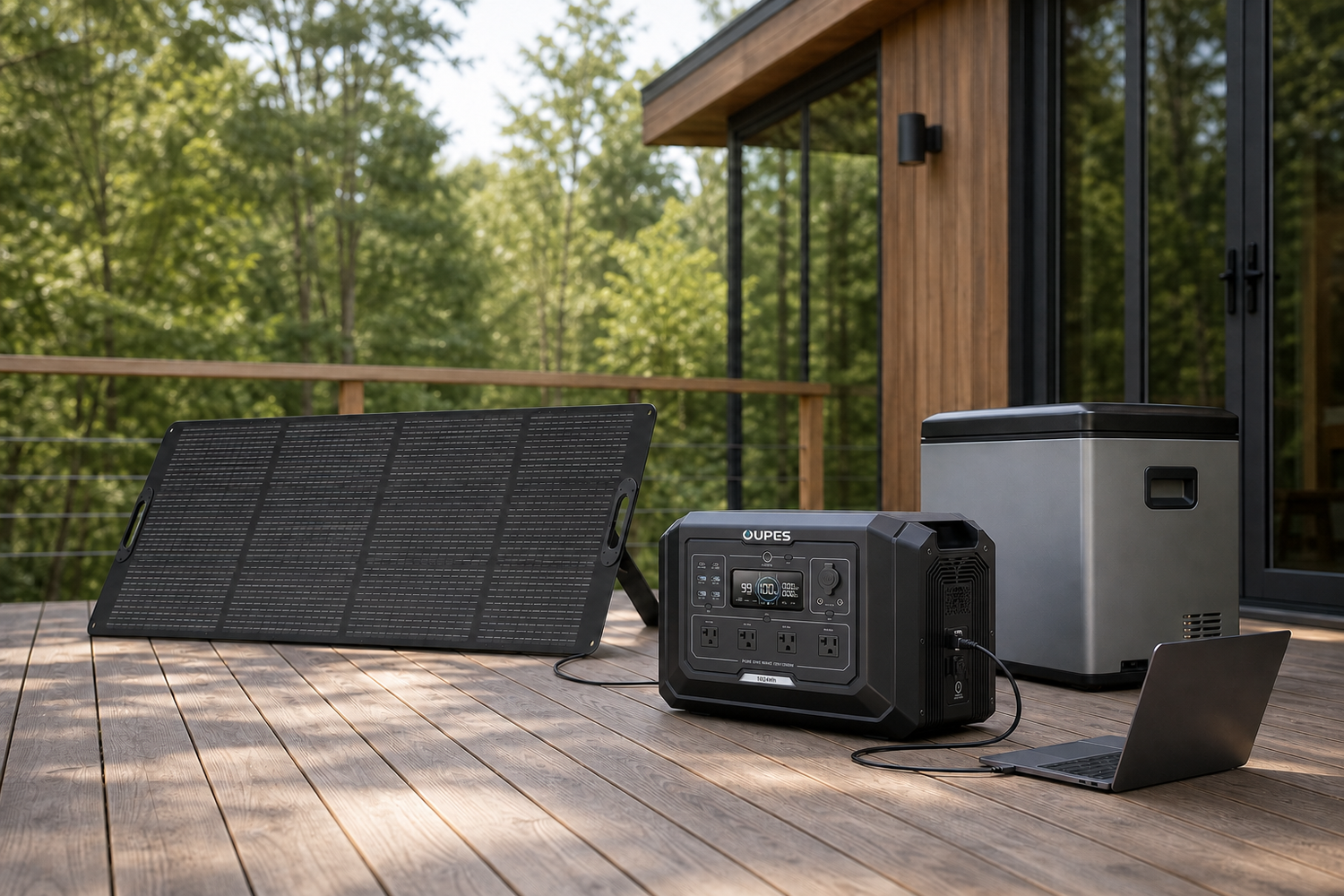
A portable power station with a solar panel works best when the battery covers overnight and poor-weather demand while the panel replaces average daily energy. Match panel voltage, current, connector and wattage to the station's MPPT limits; physical plug fit alone is not proof of compatibility.
This guide answers the practical question behind portable power station with solar panel and then turns it into a safe sizing method. The calculations are estimates, not guarantees. Actual results depend on device cycling, motor startup, temperature, battery age, conversion loss, power factor, cable condition, charging taper, sunlight and user behaviour.
Quick Answer
A portable power station with a solar panel works best when the battery covers overnight and poor-weather demand while the panel replaces average daily energy. Match panel voltage, current, connector and wattage to the station's MPPT limits; physical plug fit alone is not proof of compatibility.
Start with measured demand rather than a headline specification. Continuous watts determine whether equipment can stay on; surge watts cover short startup events; watt-hours determine duration. Voltage, connector type, grounding and port-specific limits can make an otherwise adequate wattage incompatible.
Ratings and Measurements That Matter
Estimate daily solar harvest as panel watts x equivalent sun-hours x a conservative system factor. Compare the result with daily load Wh and include shade, snow and seasonal conditions.
Read the complete nameplate or manual. For a simple DC calculation, watts are approximately volts multiplied by amps. For energy, watt-hours equal average watts multiplied by hours. AC equipment can involve power factor and motor behaviour, so measured true power is preferable to multiplying volts and amps blindly.
A charger's printed wattage is usually a maximum, while an appliance heater may operate close to its rating. Compressors, pumps and motors can briefly demand several times their normal running input. A safe plan records both ordinary energy over time and the worst credible simultaneous event.
Practical Reference Table
These values are planning references. They do not replace the exact battery, appliance, vehicle, RV or electrical-system documentation.
| Item | Meaning or Planning Value | Why It Matters |
|---|---|---|
| Daily load | Watt-hours per day | Start with measured energy |
| Panel array | Watts under test conditions | Real field output varies |
| Solar input | Voltage, current and watts | All limits must be respected |
| Battery | Watt-hours and charging limits | Provides energy when sunlight changes |
Calculations and Worked Examples
Use the following sequence. First, calculate load energy: Wh = average watts x hours. Next, estimate rated battery need: required Wh = load Wh / usable-system factor. For illustration, this article uses 85% as a combined planning factor for conversion loss and reserve. It is not a guaranteed product efficiency.
| Example | Result | Interpretation |
|---|---|---|
| 240W x 4 sun-hours x 0.70 | 672Wh/day | Illustrative clear-day harvest |
| 1,200Wh / 4h / 0.70 | About 429W array | Round up within input limits |
| 1,024Wh / 180W average input | 5.7 ideal hours | Allow taper and losses |
| 2,000Wh/day x 2 reserve days | 4,000Wh | Before usable-capacity margin |
For cycling loads, measure an entire representative period. For high-power short loads, preserve the full watt requirement even when total Wh are modest. A 1,500W appliance used for 20 minutes consumes about 500Wh, but it still requires an inverter that can safely deliver the full 1,500W.
When solar is involved, a rough daily estimate is panel watts x equivalent full-sun hours x system factor. NREL's PVWatts illustrates why location, weather, temperature and system losses must be included. Canadian winter planning should not rely on a summer average.
Step-by-Step Sizing Method
- List essential loads. Separate safety, medical, communications and property-protection needs from optional comfort use.
- Record real ratings. Use labels, manuals, EnerGuide data and a suitable energy meter where practical.
- Calculate watt-hours. Multiply average watts by operating time and measure cycling appliances over a full cycle.
- Add simultaneous watts. Include only loads that can overlap, but test the worst realistic overlap.
- Check startup and voltage. Confirm motor surge, waveform and every 120V, 240V or regulated DC requirement.
- Choose recharge routes. Compare AC, vehicle and solar input with the energy that must be restored.
- Add reserve. Allow for cold, heat, aging, poor sun, longer outages and an extra user or device.
Scenario Planning
| Scenario | Practical Starting Point | Main Limitation |
|---|---|---|
| Light camping kit | Exodus 1200 plus 100W/240W | 240W station solar limit |
| Higher-output camping | Mega 1 plus up to 800W compatible input | Array voltage/current limits |
| Longer backup | Exodus 2400 plus up to 800W | Current CA page shows sold out |
| Expandable system | Mega 3 plus up to 2,100W solar | Weight and installation planning |
The most portable system is not always the most resilient, and the largest battery is not always the best value. A good plan is easy to operate, fits the transport or installation space, can be recharged before the next use period and leaves a protected reserve for the highest-priority load.
OUPES Product Options
The following specifications were checked against the OUPES Canadian product pages during drafting. Prices, bundles and stock can change, so verify the live page before publication. Product selection must follow the measured load; it should not be forced into a topic where the voltage or output is unsuitable.
| Model | Capacity / Expansion | AC Output | Solar Input | Cycle Rating | Best-Fit Role |
|---|---|---|---|---|---|
| OUPES Exodus 1200 | 992Wh | 1,200W / 3,600W surge | 240W | 3,500+ to 80% | Portable essentials and managed camping loads |
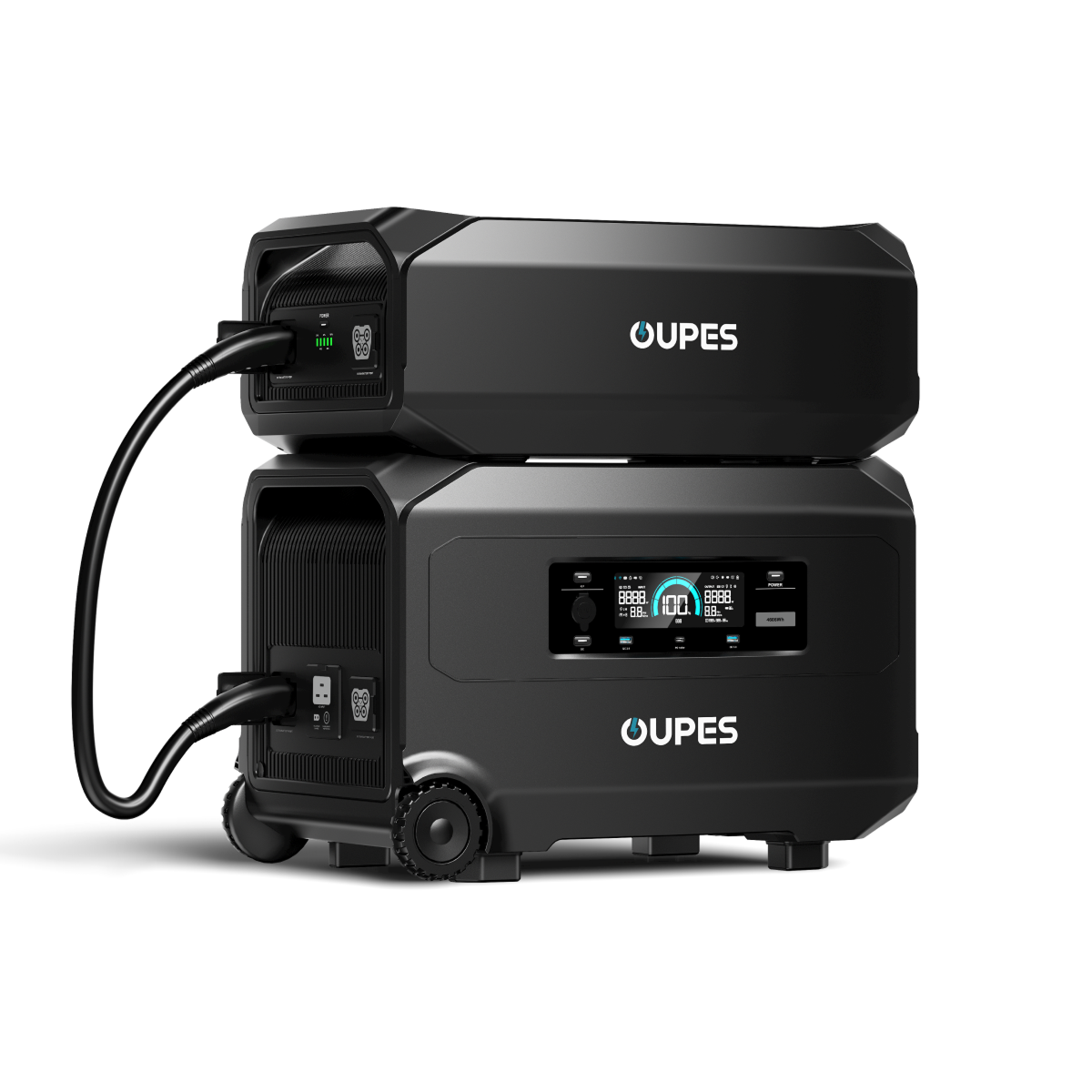
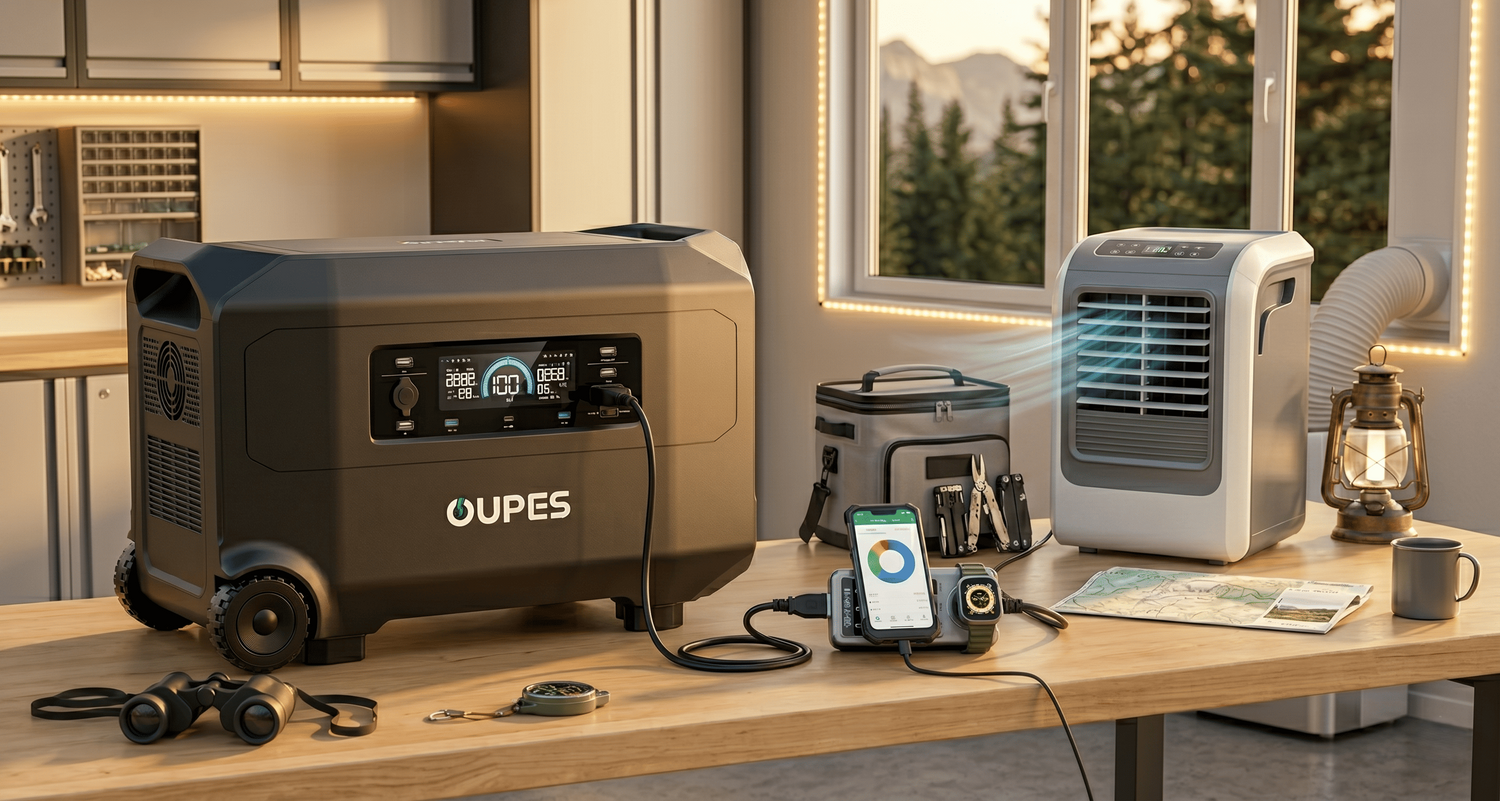
| OUPES Mega 1 | 1,024Wh; expandable to 5.12kWh | 2,000W / 4,500W surge | 800W | 3,500+ to 80% | High-power short loads; capacity remains about 1kWh before expansion |
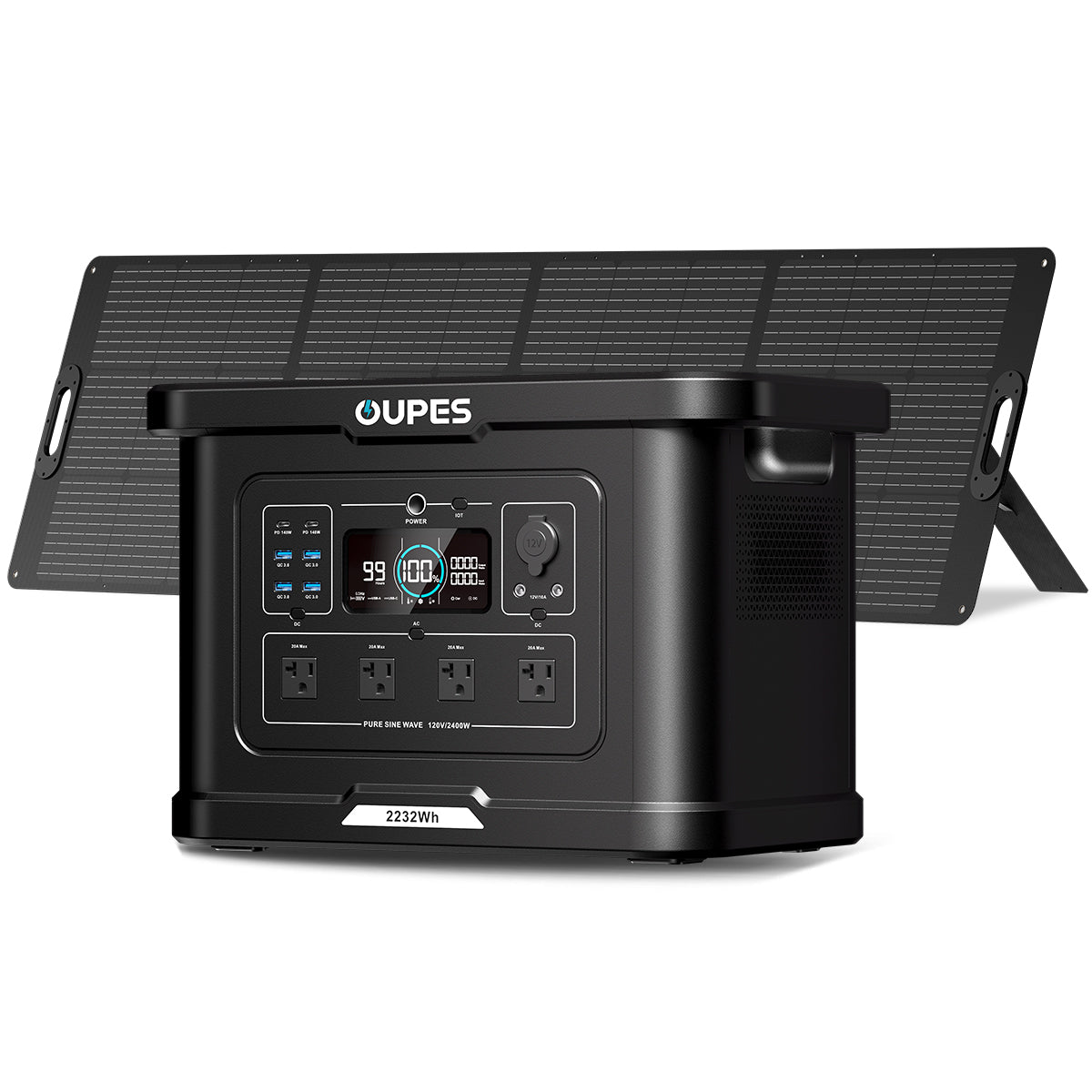
| OUPES Exodus 2400 | 2,232Wh | 2,400W / 4,500W surge | 800W | 3,500+ to 80% | Longer runtime; shown sold out on the CA page at drafting |
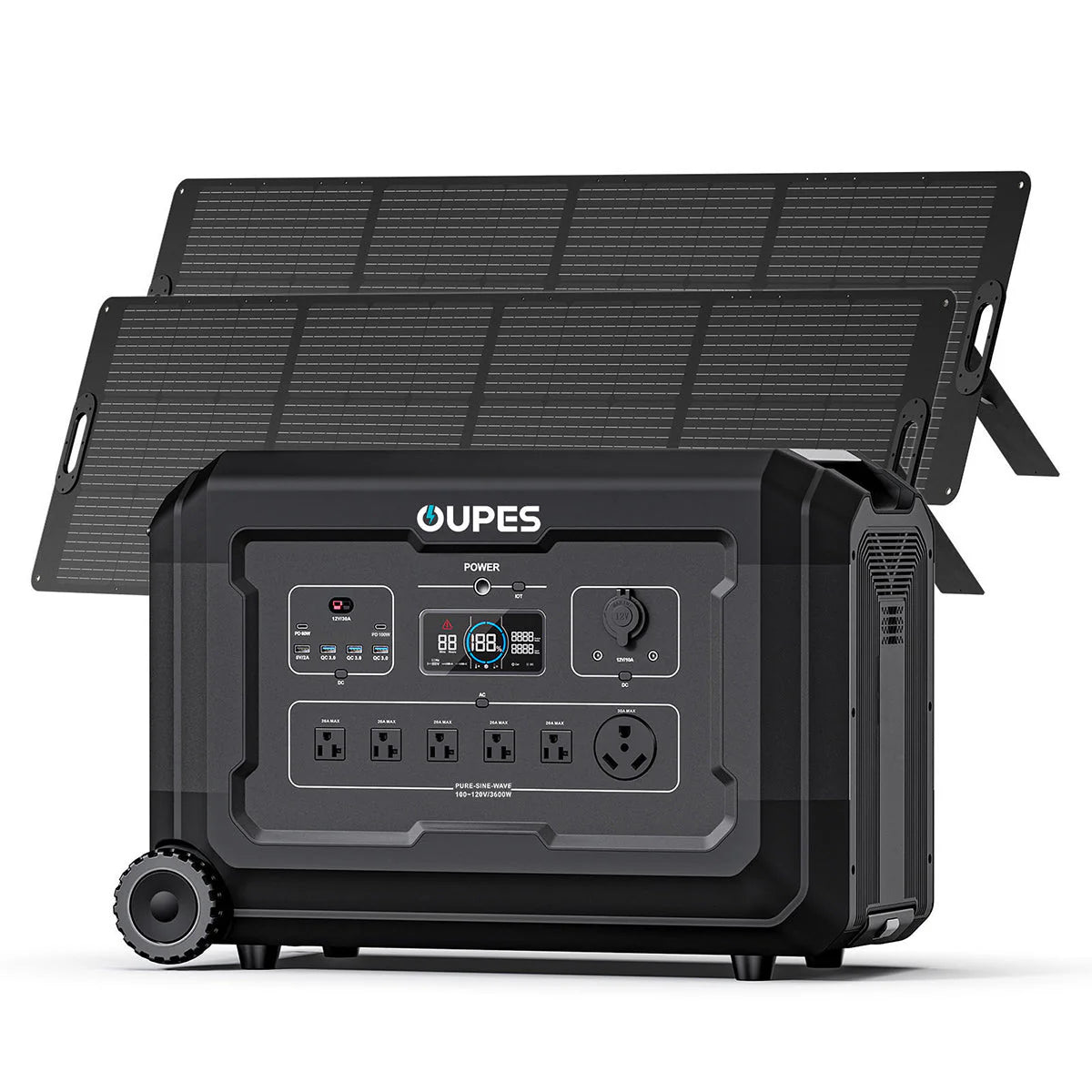
| OUPES Mega 3 | 3,072Wh; expandable to 15.36kWh | 3,600W / 7,000W surge | 2,100W | 3,500+ to 80% | RV and broader home-essential plans; not a 5kW or 10kW source |
Exodus 1200 is the lighter 992Wh option. Mega 1 provides 2,000W output but still starts with only 1,024Wh, making it useful for short high-power loads rather than automatically long runtime. Exodus 2400 increases stored energy, while Mega 3 supports broader 3,600W plans and expansion. Review the Canadian portable power station collection once the required power and energy are known.
Solar and Recharging
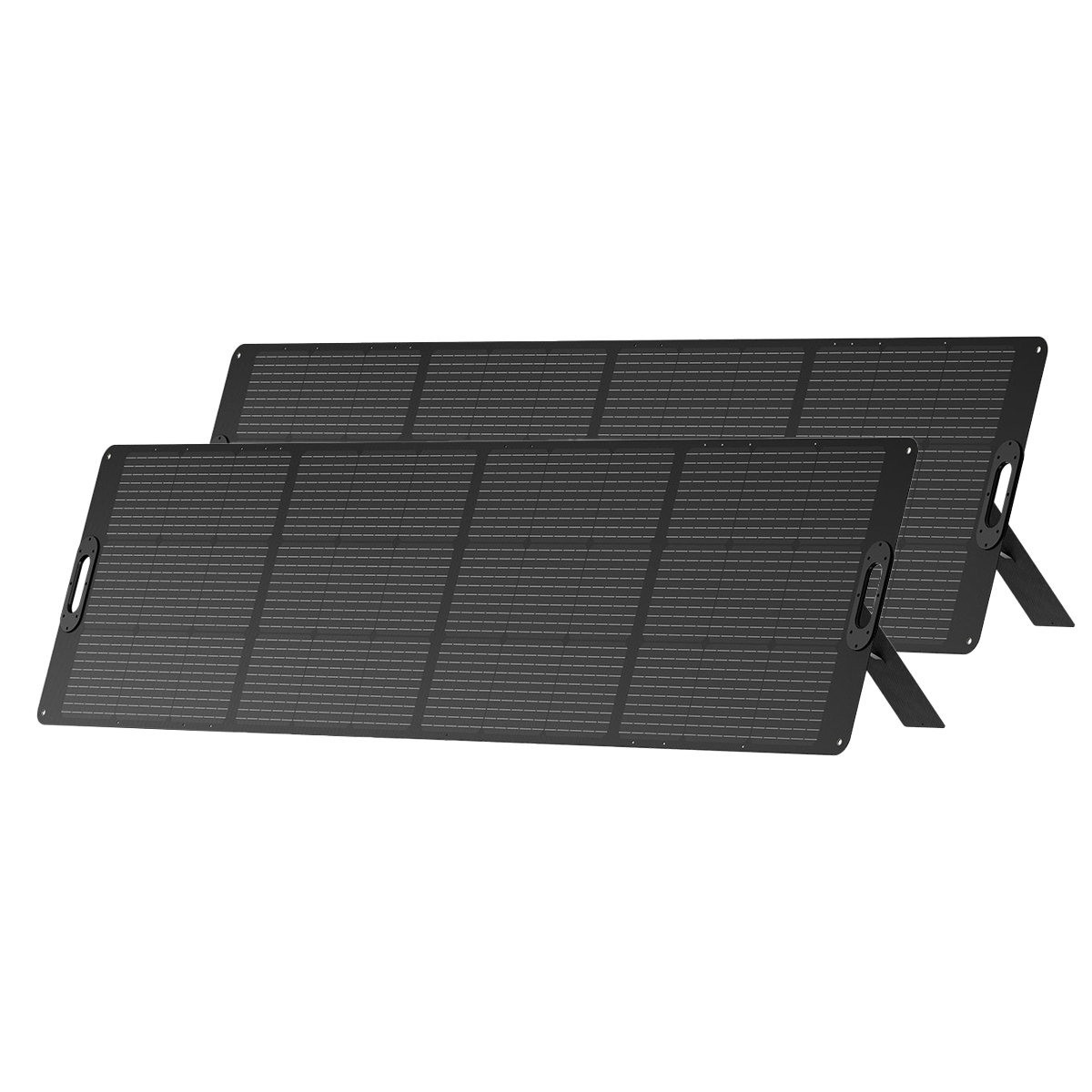
Solar panel nameplate watts are not guaranteed field output. Clouds, shade, snow, heat, low sun angle, cable loss and the charge controller's voltage/current limits reduce or cap energy. Always calculate the complete array's open-circuit voltage and short-circuit current before series or parallel wiring.
For battery-and-panel bundles, the Canadian solar generator collection provides a convenient starting point. Still compare the panel configuration with the station's entire MPPT window. A physically compatible connector does not prove electrical compatibility, and oversized solar cannot make a small battery support an incompatible appliance.
Safety and Limitations
Calculate full array open-circuit voltage and short-circuit current before combining panels. Do not connect or disconnect damaged DC connectors under load.
Keep battery equipment dry, ventilated and within its operating and storage temperature limits. Inspect cables and connectors before use. Stop if a battery is swollen, damaged, wet, unusually hot or producing an unusual smell or sound. Use approved chargers and never modify a lithium-ion battery pack.
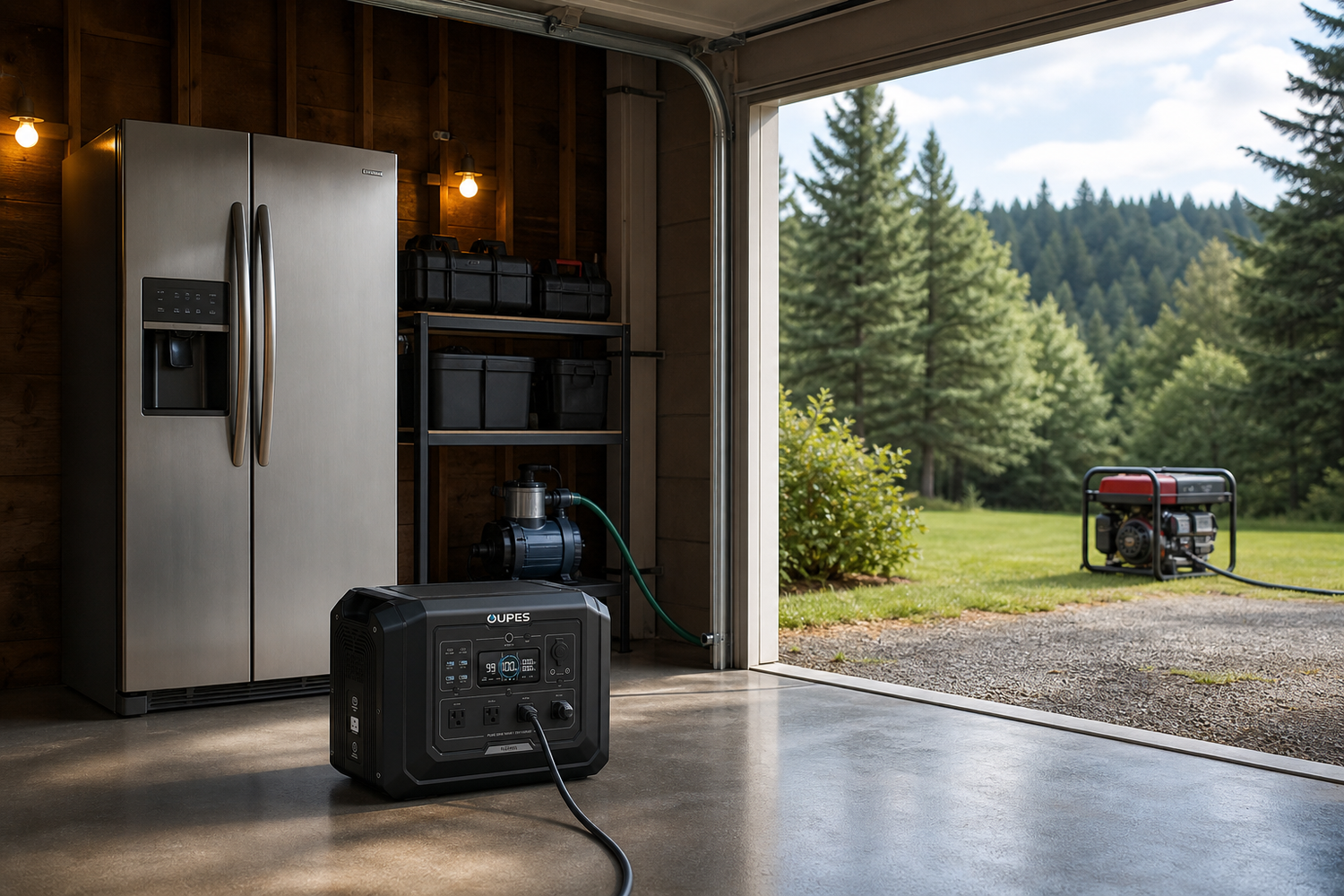
Fuel generators are a separate safety category. They produce carbon monoxide and must never operate indoors, in a garage, shed, camper, tent or near building openings. A battery power station avoids combustion exhaust at the point of use, but it does not remove electrical, thermal or connection hazards.
Common Mistakes to Avoid
- Confusing watts, watt-hours, amps and amp-hours.
- Using a maximum charger rating as constant consumption.
- Ignoring motor startup, appliance cycling or 120/240V requirements.
- Assuming every outlet can deliver its printed maximum simultaneously.
- Publishing solar charging time from panel nameplate watts alone.
- Using an adapter because it fits without checking voltage, polarity and current.
- Backfeeding a building or RV electrical system through an improvised cord.
- Giving runtime without stating loss, duty-cycle and weather assumptions.
Final Verdict
A portable power station with a solar panel works best when the battery covers overnight and poor-weather demand while the panel replaces average daily energy. Match panel voltage, current, connector and wattage to the station's MPPT limits; physical plug fit alone is not proof of compatibility.
Measure first, calculate second and choose equipment last. Match continuous and surge power to the worst credible simultaneous load, match watt-hours to the required duration and match charging input to the energy that must be restored. Keep enough reserve that one poor-weather day or unexpected startup event does not collapse the plan.
Frequently Asked Questions
Does a 240W panel always produce 240W?
No. Nameplate power is under test conditions; real output changes with sun, heat, angle and shade.
Can I mix different panels?
Avoid it unless the electrical characteristics and connector system are deliberately engineered.
How large should the battery be?
Enough for energy needed between reliable charging opportunities plus reserve.
How should I estimate runtime for portable power station with solar panel?
Calculate watt-hours from average watts multiplied by operating hours, then divide rated battery energy by the same load after applying a realistic usable-system factor. Cycling, startup, temperature and battery condition can change the result.
Can solar charging change the sizing result?
Solar can restore energy, but it should be modelled with conservative local sun, shade, snow, panel orientation and the station's input limit. Critical plans need stored reserve or another compatible charging route.
Which OUPES model should I choose?
Choose only after measuring the load. Exodus 1200 emphasizes portability, Mega 1 adds output, Exodus 2400 adds stored energy, and Mega 3 adds output and expansion. None is automatically best for every scenario.
Sources

Leave a comment
This site is protected by hCaptcha and the hCaptcha Privacy Policy and Terms of Service apply.