








Introduction: The Ticking Clock of a Power Outage
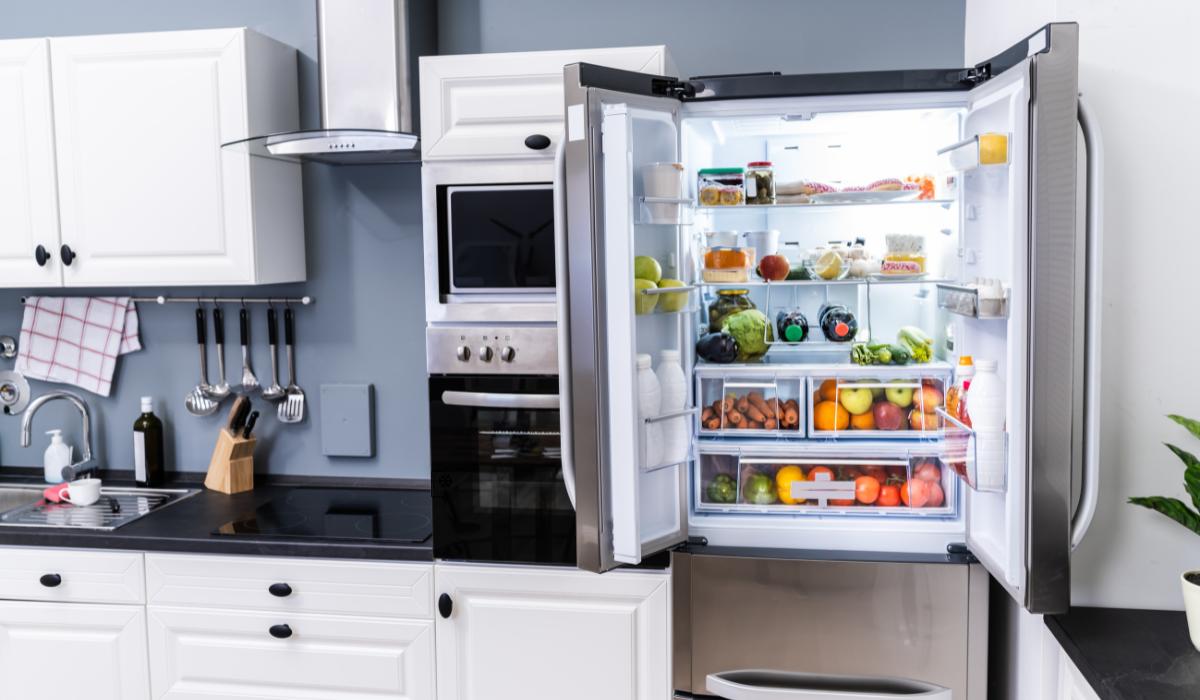
When the grid goes down, the immediate silence is often followed by a creeping sense of anxiety. While the loss of internet or television is an inconvenience, the loss of refrigeration is a ticking clock. According to the U.S. Food and Drug Administration (FDA) guidelines on power outages, a refrigerator will only keep food safe for up to 4 hours without power if the doors remain closed. After that window, hundreds of dollars worth of carefully stored groceries, crucial medications like insulin, and precious frozen goods are at risk of spoiling.
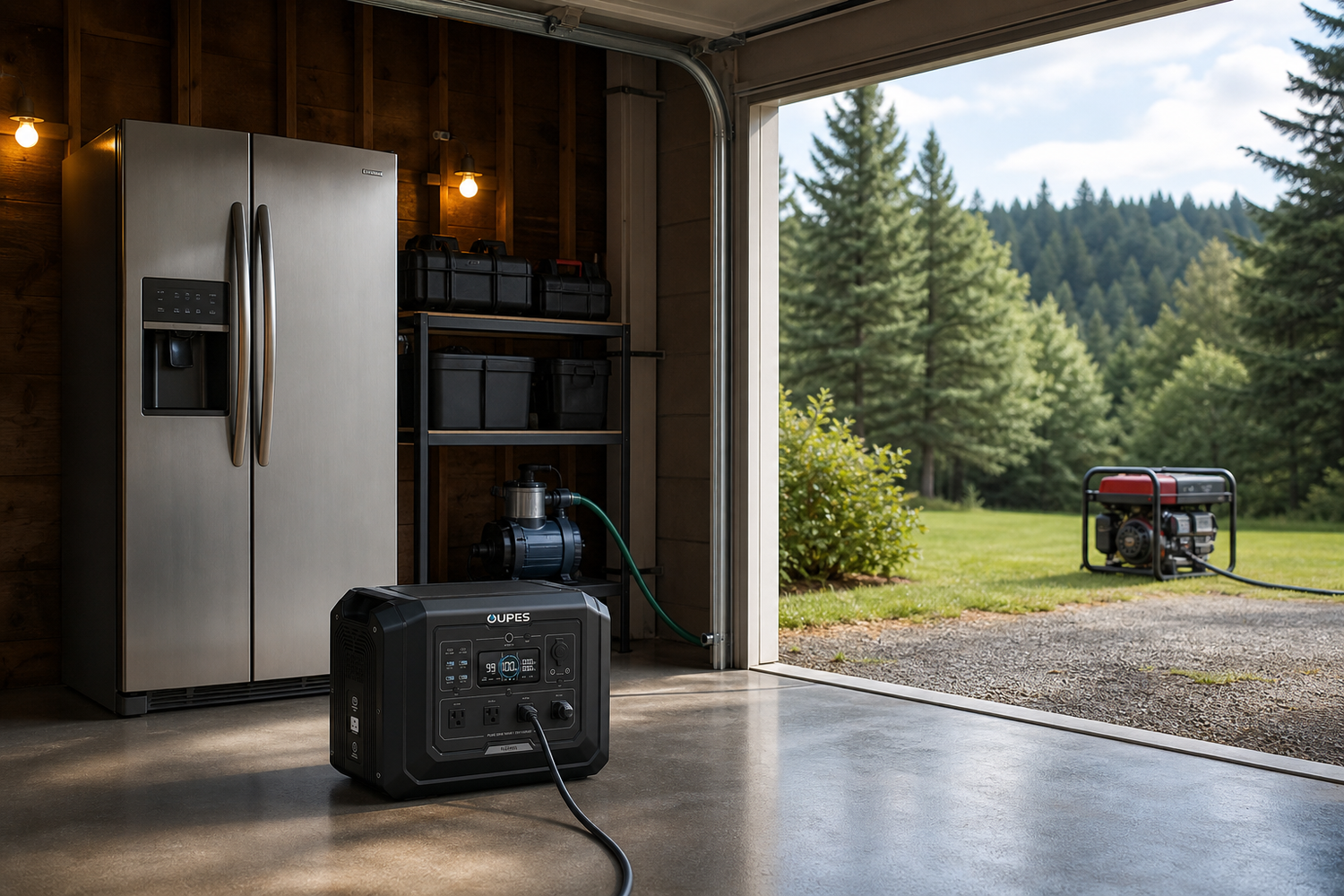
In the past, the only solution was to drag a noisy, heavy gas generator out into the storm, wrestling with fuel cans and toxic exhaust fumes. Today, modern families are making the smart switch to solar generators (portable power stations coupled with solar panels). They are silent, emit zero fumes, and can be used safely indoors right next to your kitchen appliances. However, a common question arises: What size solar generator do I actually need to keep my refrigerator running?
Refrigerators are deceiving appliances. While they might seem like passive storage boxes, they are powered by heavy-duty compressors that have unique electrical demands. In this comprehensive, educational guide, we will walk you through the exact mathematics of sizing a solar generator, explain the critical difference between running watts and starting watts, and demonstrate how to select a reliable system like an OUPES solar generator to protect your family's food supply.
Table of Contents
- 1. The Golden Rule of Appliances: Starting Watts vs. Running Watts
- 2. How to Find Your Refrigerator's Power Requirements
- 3. Understanding the "Duty Cycle" (Why Your Fridge Doesn't Run 24/7)
- 4. The Math: Step-by-Step Generator Sizing Calculation
- 5. Battery Capacity (Wh) vs. Inverter Power (W): What's the Difference?
- 6. Sizing the Solar Panels for Continuous Off-Grid Power
- 7. Why OUPES is the Trusted Choice for Refrigerator Backup
- 8. Pro-Tips for Maximizing Refrigerator Efficiency During an Outage
- 9. Frequently Asked Questions (FAQ)
1. The Golden Rule of Appliances: Starting Watts vs. Running Watts
The single biggest mistake consumers make when buying a solar generator is looking only at the "running watts" of their refrigerator. To properly size a unit, you must understand the physics of an electric motor.
The core of your refrigerator is a compressor pump. When this compressor is resting, it requires a massive, instantaneous surge of electrical current to overcome inertia and start spinning. This is known as the Starting Watts (or Surge Watts). Once the compressor is up to speed, the power demand drops significantly to a steady state, known as the Running Watts (or Rated Watts).
For a typical household refrigerator, the starting wattage is usually two to three times higher than the running wattage. For example, if your fridge requires 200W to run smoothly, it might demand a 600W jolt for just a split second to start up. If your solar generator's inverter cannot handle that 600W surge, the generator will instantly shut down into protective mode, and your fridge will not turn on, regardless of how large the battery is.
2. How to Find Your Refrigerator's Power Requirements
Before you can shop for a solar generator, you need to play detective in your own kitchen. Every legally sold appliance in the United States has an energy specification sticker. This is usually located inside the refrigerator door frame, on the inner side wall, or on the back of the unit.
According to the Department of Energy (DOE) appliance energy use estimation guidelines, you can calculate the exact wattage if it isn't explicitly listed. You are looking for two numbers: Volts (V) and Amps (A). In North America, the voltage will almost always be 115V or 120V.
The Formula: Volts x Amps = Watts
Example: You find a sticker that says "115V | 1.5A".
Calculation: 115 x 1.5 = 172.5 Watts. This is your Running Wattage.
To estimate your Starting Wattage, simply multiply that number by 3.
Calculation: 172.5 x 3 = 517.5 Surge Watts.
3. Understanding the "Duty Cycle" (Why Your Fridge Doesn't Run 24/7)
Many people panic when they realize their fridge consumes 200W of power, assuming they need to supply 200W every single hour of the day (which would equal 4,800 Watt-hours a day!). Fortunately, refrigerators operate on a thermostat.
The compressor only kicks on when the internal temperature rises above the set threshold. Once it cools the interior down, the compressor turns off, and the fridge uses almost zero power (save for a tiny LED light or a digital display). The percentage of time the compressor actually runs over a 24-hour period is called the Duty Cycle.
For modern, well-insulated, Energy Star-rated refrigerators, the duty cycle is typically around 30% to 40%. This means the compressor is only actively drawing power for about 8 to 9 hours out of a 24-hour day. Keep in mind that older fridges, extreme summer ambient temperatures, or frequently opening the door will force the duty cycle to increase to 50% or more.
4. The Math: Step-by-Step Generator Sizing Calculation
Now that we understand the variables, let's calculate exactly what size solar generator we need. We will use a standard, modern full-size family refrigerator as our example.
- Step 1: Determine Running Watts. Let's assume our fridge uses 200W while running.
- Step 2: Determine Starting Watts. We multiply by 3 to be safe. 200W x 3 = 600W Surge.
-
Step 3: Calculate Daily Energy Consumption (Watt-hours). Assuming a 33% duty cycle, the fridge runs for 8 hours a day.
200W x 8 hours = 1,600 Watt-hours (Wh) per day.
The Verdict: Based on this math, to run this specific refrigerator for a full 24 hours without any solar panels recharging the unit, you would need a solar generator with an inverter that can output at least 600W continuously (to handle the surge) and a battery capacity of at least 1,600Wh.
Important Note: Always build in a 20% buffer. Inverters are not 100% efficient, and lithium batteries should not be drained to absolute zero. Therefore, aiming for a generator in the 2,000Wh range is the smartest choice for a standard fridge over a 24-hour period.
5. Battery Capacity (Wh) vs. Inverter Power (W): What's the Difference?
When shopping for a solar generator, you will see two primary numbers advertised, and it is vital not to confuse them:
1. Inverter Power Output (Measured in Watts - W): This is the "muscle" of the machine. It dictates how many appliances you can plug in at the exact same time and whether it can handle the initial "Surge Watts" of your fridge's compressor. A high wattage rating (e.g., 2000W) means you can run a fridge, a microwave, and a coffee maker simultaneously.
2. Battery Capacity (Measured in Watt-hours - Wh): This is the "gas tank" of the machine. It dictates how long the appliances can run. A 2000Wh battery contains exactly double the electrical fuel of a 1000Wh battery.
When sizing for a refrigerator, the Inverter Output must be larger than your Fridge's Starting Watts, and the Battery Capacity must be large enough to sustain your desired outage duration (typically 1500Wh to 2500Wh for an overnight/24-hour full-size fridge backup).
6. Sizing the Solar Panels for Continuous Off-Grid Power
A portable power station is just a battery until you add solar panels—then it becomes a true "Solar Generator" capable of infinite power. If your outage lasts for 3 or 4 days, even a massive battery will eventually die. The goal is to generate enough solar power during daylight hours to offset the power your fridge uses, plus top off the battery for the coming night.
If our example fridge uses 1,600Wh per day, we need solar panels that can harvest at least that much energy. If you live in an area that gets 5 hours of "peak sun" per day, you would calculate:
1,600Wh / 5 hours = 320 Watts.
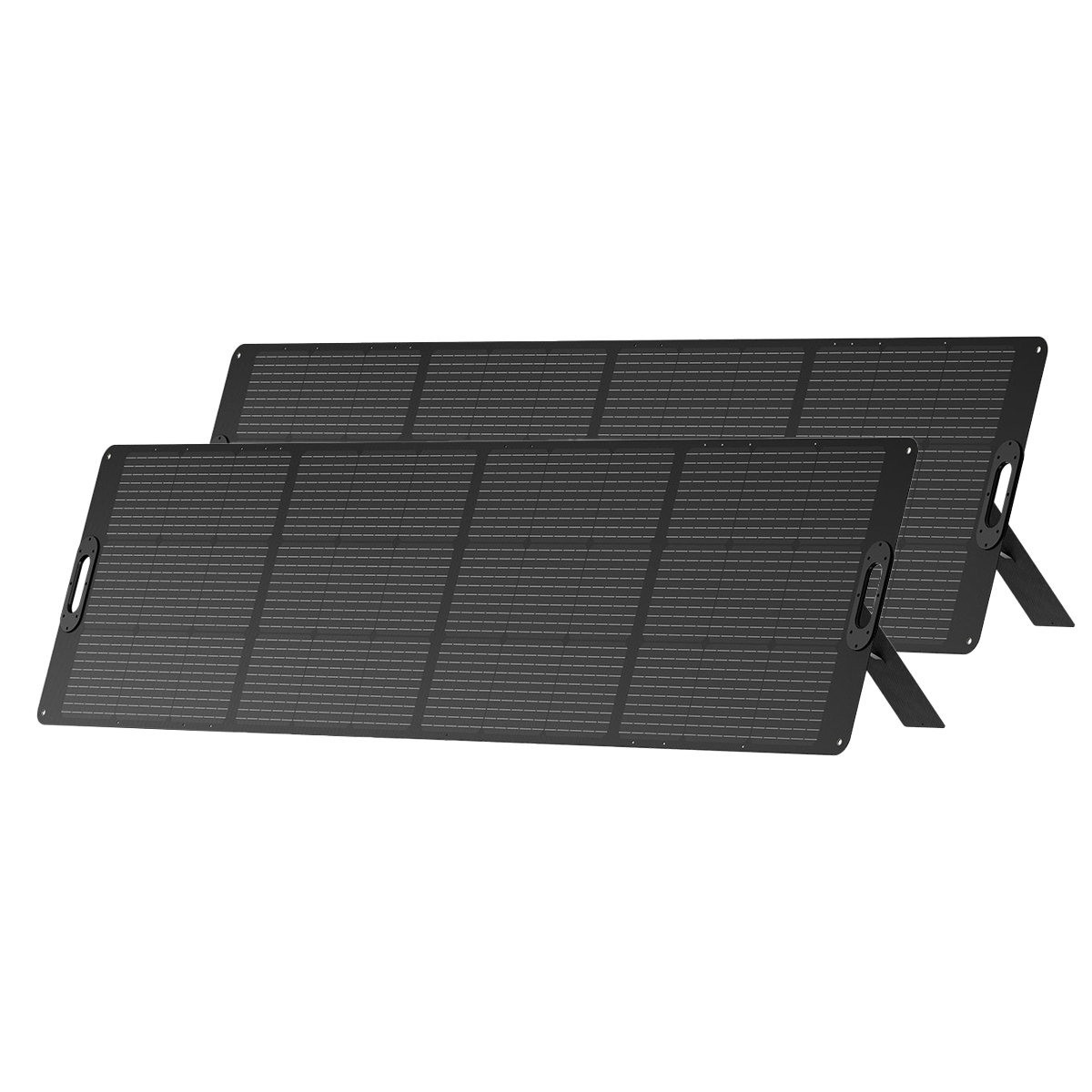
Because solar panels rarely operate at 100% laboratory efficiency due to clouds, angles, and atmospheric dust, it is highly recommended to over-panel. Using 400W to 600W of portable solar panels will ensure your generator is fully recharged by sunset, keeping the refrigerator humming indefinitely.
7. Why OUPES is the Trusted Choice for Refrigerator Backup
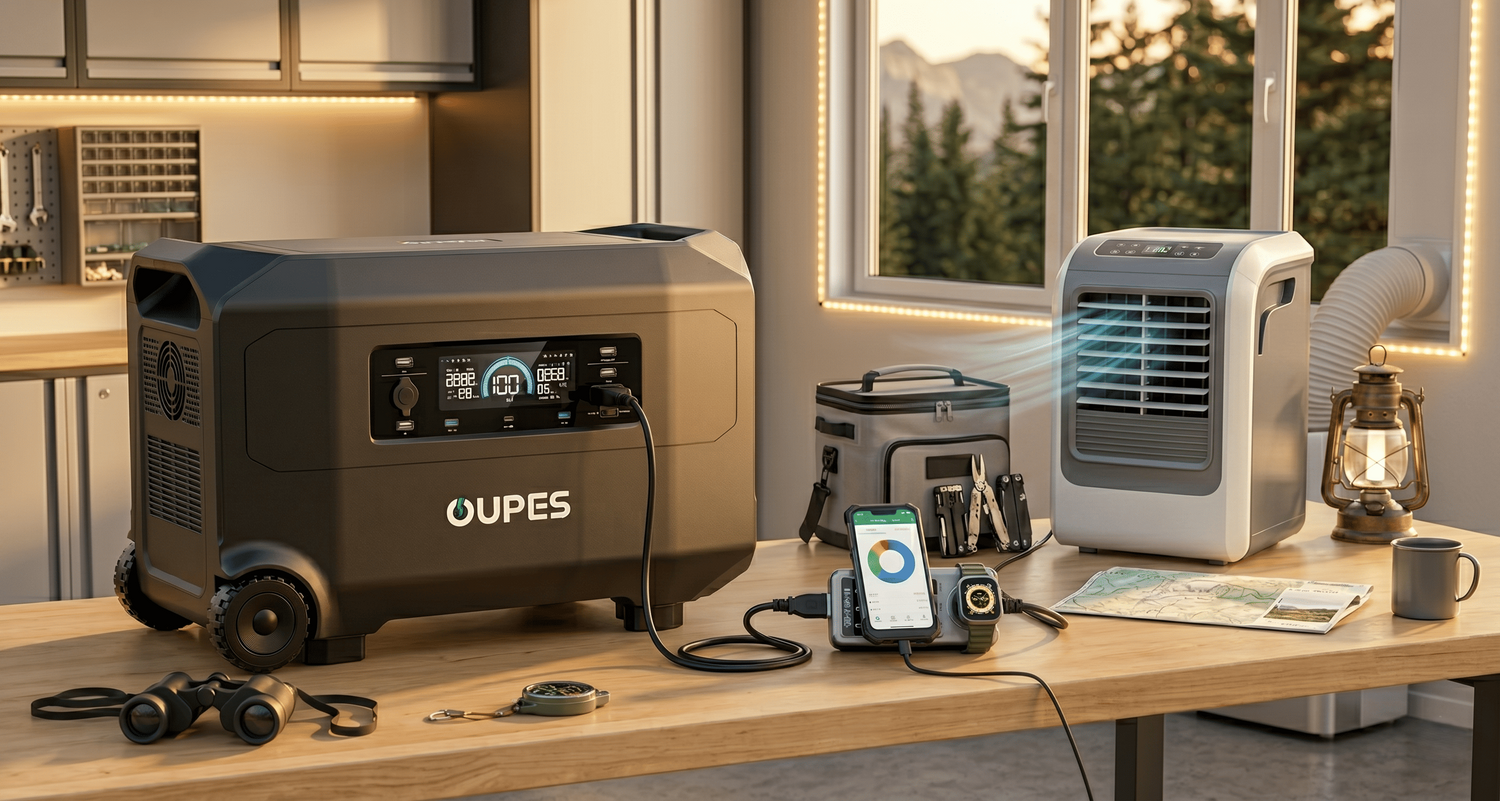
When the safety of your food and family is on the line, the quality of your backup power cannot be compromised. This is why OUPES portable power stations and solar generators have become the gold standard for reliable home backup.
1. Pure Sine Wave Inverters: The compressors inside modern refrigerators, especially newer "smart fridges," contain sensitive microprocessors. OUPES utilizes premium Pure Sine Wave inverters. This ensures the electrical current delivered to your fridge is perfectly smooth and identical to grid power, preventing appliance buzzing, overheating, or permanent motherboard damage.
2. LiFePO4 Battery Chemistry: Unlike older lithium-ion batteries that degrade quickly, OUPES power stations are built with EV-grade Lithium Iron Phosphate (LiFePO4) cells. These batteries are incredibly thermally stable (making them vastly safer for indoor use) and boast a lifespan of over 3,500 complete charge cycles. This means your OUPES unit will remain a reliable backup for your refrigerator for over a decade.
3. Advanced Battery Management System (BMS): Refrigerator surges can be unpredictable. The intelligent BMS inside every OUPES unit monitors current, voltage, and temperature in real-time. If an older fridge creates a massive unexpected surge, the OUPES BMS safely handles the spike without damaging the generator or the appliance.
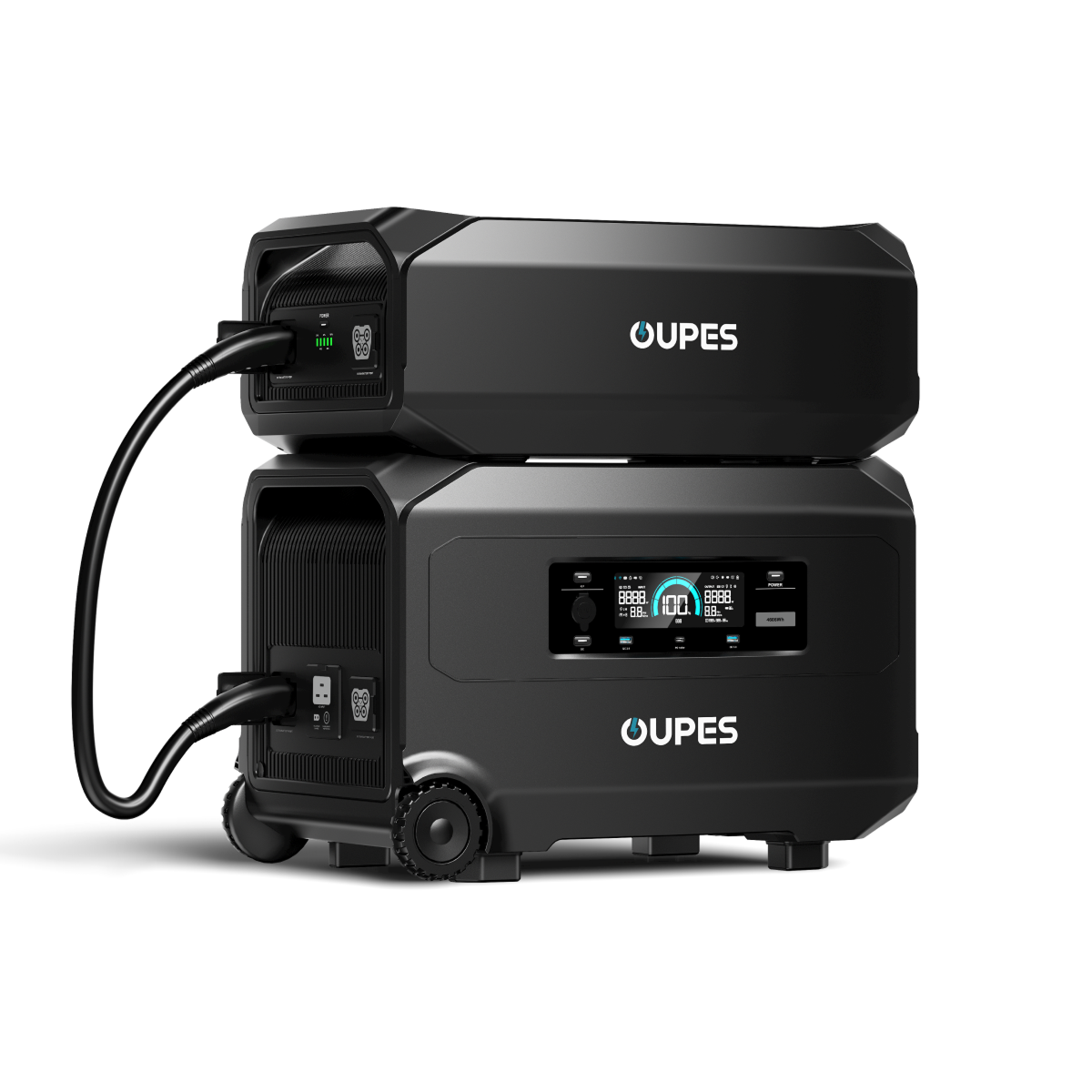
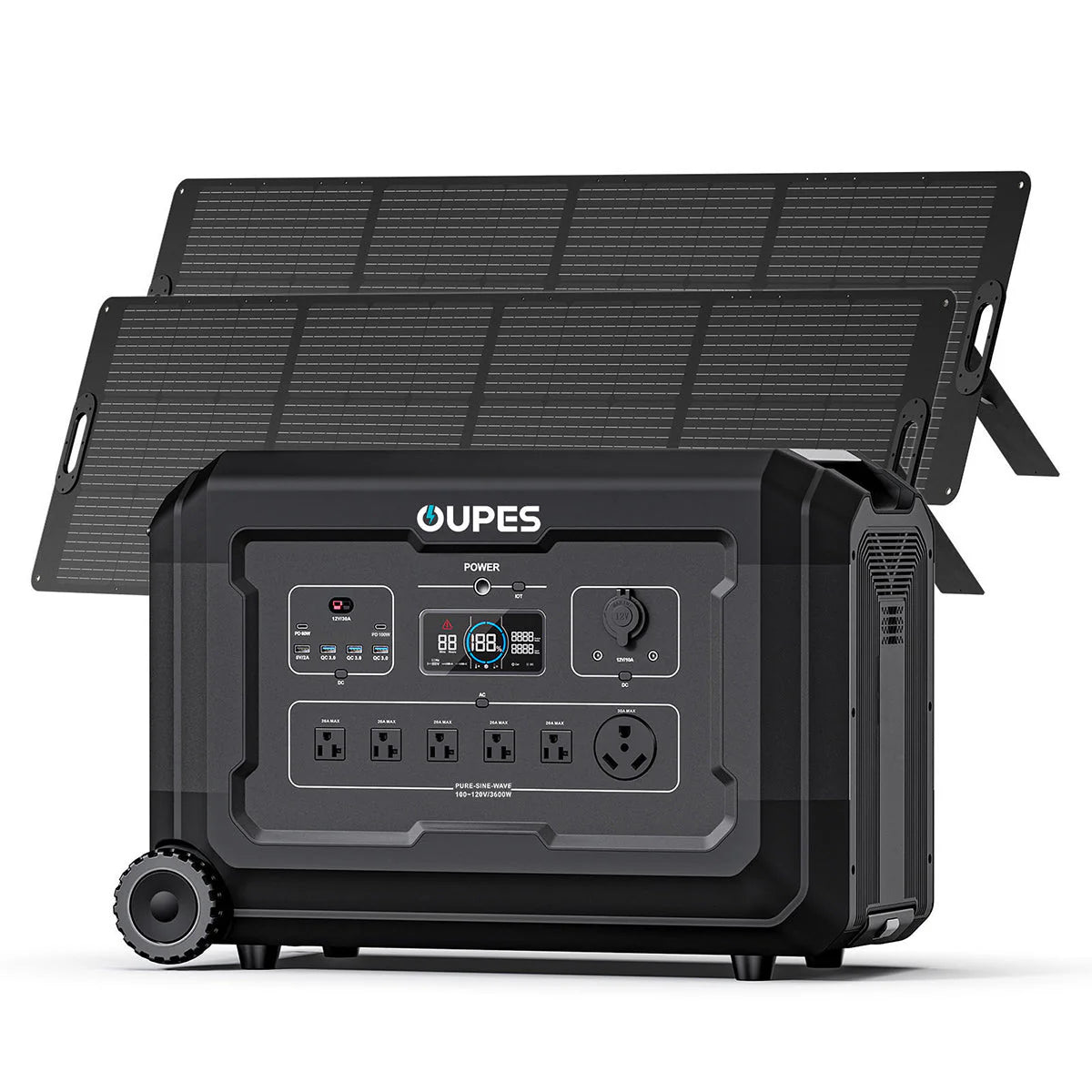
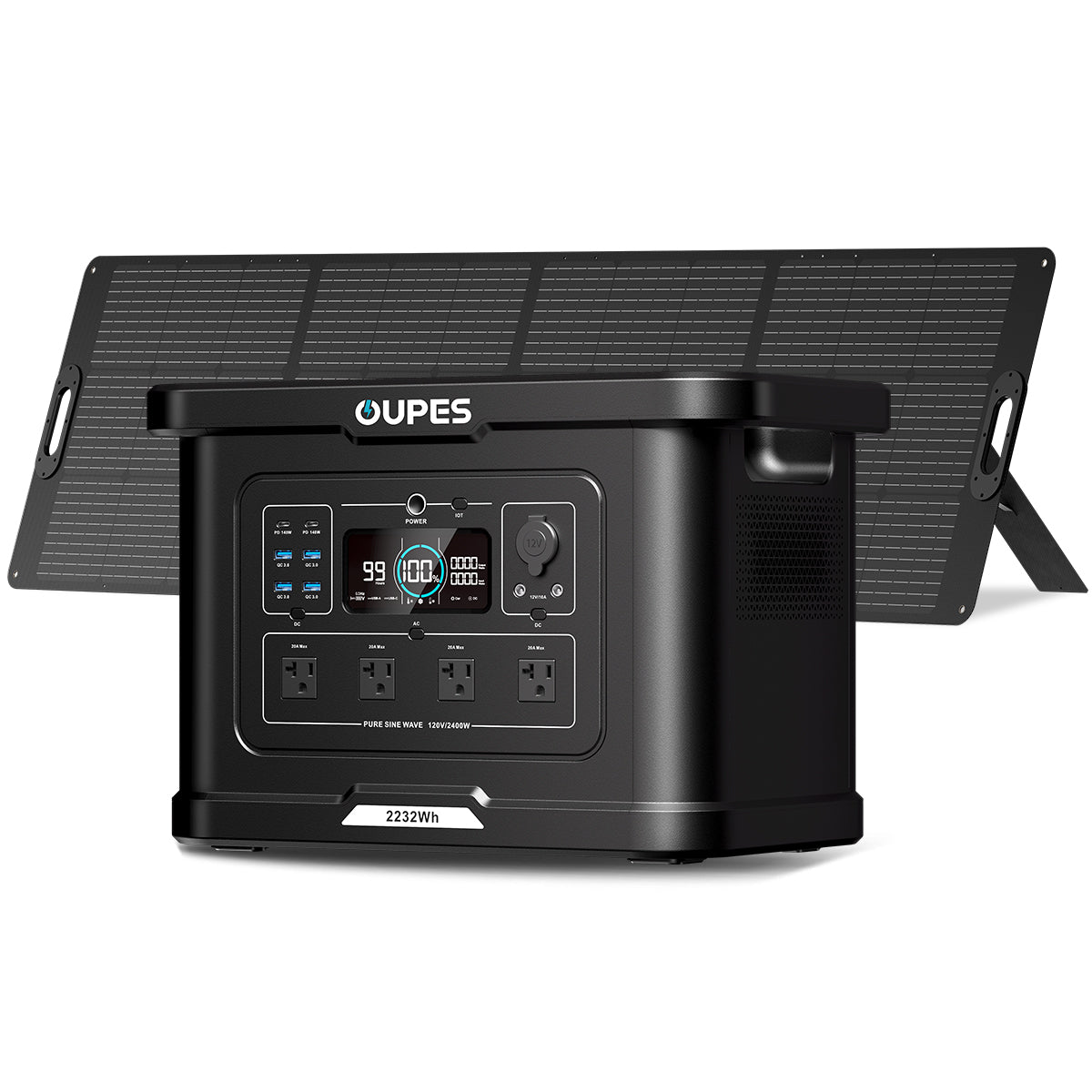
Models like the higher-capacity OUPES power stations (often found in the 2000W/2000Wh range and above) are meticulously engineered to handle exactly these types of heavy-duty, critical-load scenarios, making them the ultimate peace-of-mind investment for hurricane season, winter storms, or rolling blackouts.
8. Pro-Tips for Maximizing Refrigerator Efficiency During an Outage
Even with a high-capacity OUPES solar generator, practicing good energy hygiene will drastically extend your battery life during a grid failure:
- Keep the Door Shut: Every time you open the fridge door, cold air falls out and warm air rushes in, immediately triggering the compressor to turn on. Only open the door when absolutely necessary, and grab what you need quickly.
- Turn Off the Ice Maker: Ice makers feature heating elements that slightly warm the mold to release the ice cubes. This uses a massive amount of unnecessary power. Turn the ice maker switch to "OFF" immediately during an outage.
- Check the Seals: A loose rubber gasket around your fridge door leaks cold air 24/7. Test your seal by closing the door on a dollar bill. If you can pull the bill out with zero resistance, your seals are failing and increasing your power consumption.
- Fill Empty Space with Water Jugs: A fully stocked fridge retains cold much better than an empty one, as the frozen/cold items act as thermal mass. If your fridge is half empty, fill empty spaces with jugs of water.
9. Frequently Asked Questions (FAQ)
Q1: Can a small 500Wh solar generator run my full-size refrigerator?
A: Generally, no. A 500Wh unit usually has a small inverter (around 500W to 600W). It will likely fail to handle the initial surge (Starting Watts) of a full-size fridge's compressor. Even if it manages to start it, 500Wh will only run a standard fridge for about 2 to 4 hours. You need a larger unit for realistic backup.
Q2: Can I run my refrigerator and a space heater at the same time on a solar generator?
A: This depends entirely on the Inverter Output of the generator. Space heaters are massive energy hogs, often drawing 1500W continuously. If your fridge runs at 200W, the combined continuous load is 1700W. You would need a robust generator with an inverter rated for 2000W or higher to safely run both simultaneously.
Q3: Does the age of my refrigerator affect how much power it uses?
A: Yes, drastically. Refrigerators built before the year 2000 can consume double or triple the amount of electricity compared to modern Energy Star-certified models. If you have a vintage fridge, you will need a significantly larger battery capacity to keep it running.
Q4: Do I leave the solar panels connected while the generator is powering the fridge?
A: Absolutely. This is called "pass-through charging," and high-quality systems like OUPES support it flawlessly. The solar panels will feed power directly to the generator, which in turn powers the fridge. If the sun is strong enough, the panels will run the fridge and charge the battery at the same time.
Q5: Can I plug my refrigerator directly into the solar panel?
A: No. Solar panels produce raw, fluctuating Direct Current (DC) power that changes with the passing clouds. Your refrigerator requires stable, 120V Alternating Current (AC) power. The solar generator acts as the necessary middleman, storing the solar energy in a battery and converting it via the inverter into safe AC power for the appliance.

Leave a comment
This site is protected by hCaptcha and the hCaptcha Privacy Policy and Terms of Service apply.