








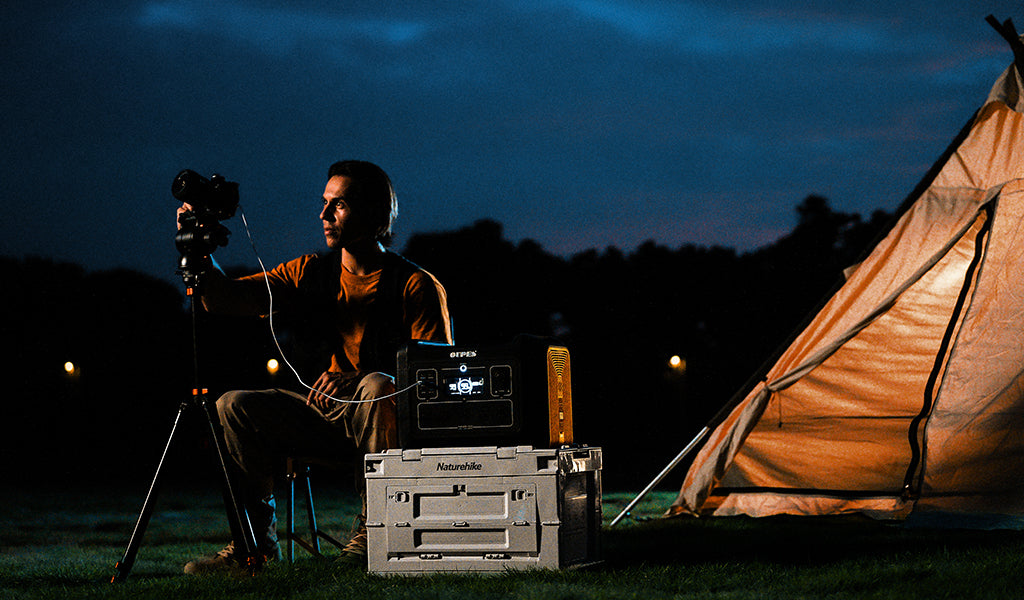
Introduction: Powering the Modern Great Outdoors
The concept of camping has evolved dramatically over the last decade. While the core appeal of escaping into nature remains unchanged, the way we experience the outdoors has modernized. Today, camping doesn't necessarily mean unplugging completely. From digital nomads working remotely in national parks to families wanting to keep their food fresh in a portable electric cooler, reliable off-grid power is no longer a luxury—it is an essential piece of outdoor gear.
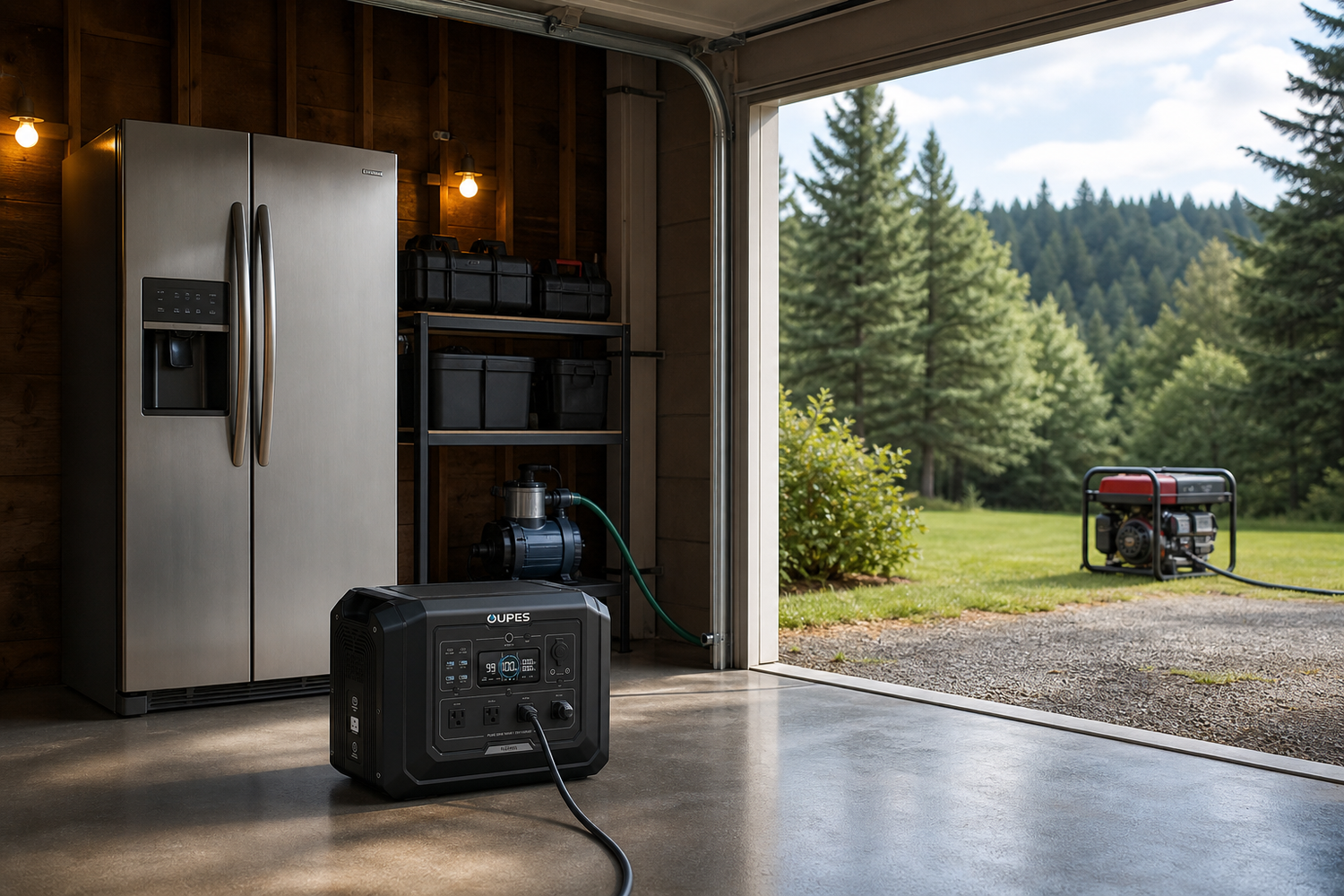
According to research highlighted by the Outdoor Industry Association, modern campers are increasingly integrating technology into their outdoor experiences for safety, comfort, and convenience. Historically, campers relying on heavy power draws had to use gas-powered generators. However, these are noisy, emit toxic carbon monoxide, require carrying highly flammable fuel, and are strictly regulated or banned in many quiet-hour campgrounds. Enter the modern portable power station (PPS): silent, zero-emission, safe to use inside a tent, and rechargeable via the sun.
However, the market is flooded with technical jargon that can confuse even seasoned outdoor enthusiasts. Terms like Watt-hours, pure sine wave, LiFePO4, and MPPT controllers are thrown around constantly. This comprehensive, educational guide is designed to demystify these concepts. We will teach you exactly how to calculate your power needs, explain the underlying battery technology, and demonstrate why a high-quality unit like an OUPES power station is the smartest investment for your outdoor adventures.
Table of Contents
- 1. The Golden Metrics: Understanding Capacity (Wh) vs. Output (W)
- 2. How to Calculate Your Camping Power Requirements
- 3. Battery Chemistry Explained: Why LiFePO4 is Essential for Campers
- 4. Inverters and Solar Controllers: The Brains Behind the Battery
- 5. Matching the Power Station to Your Camping Style
- 6. Why OUPES is the Premier Choice for Off-Grid Reliability
- 7. Pro Tips: Maximizing Battery Life in the Wilderness
- 8. Frequently Asked Questions (FAQ)
1. The Golden Metrics: Understanding Capacity (Wh) vs. Output (W)
The most common mistake first-time buyers make is confusing battery capacity with power output. To choose the right portable power station, you must understand the distinct difference between Watts (W) and Watt-hours (Wh).
Watt-hours (Wh) = Your "Gas Tank" Capacity
Watt-hours measure how much total energy the battery can store. It dictates how long you can run your devices. For example, a power station with a 1000Wh capacity can theoretically run a 100-Watt device for 10 hours (1000 divided by 100). The higher the Wh number, the more energy you have stored for a long weekend in the woods.
Watts (W) = Your "Engine" Power Output
Watts measure the maximum amount of power the station's inverter can output at any given second. It dictates what kind of devices you can plug in. If your camping coffee maker requires 1500W to heat water, but your power station only has a 500W output, the coffee maker will not turn on—even if the battery is fully charged at 100%. Furthermore, you must account for Surge Watts (or Starting Watts). Devices with electric motors, like portable refrigerators or fans, require a massive, momentary spike in power to start up, which is often double their normal running wattage.
2. How to Calculate Your Camping Power Requirements
Before purchasing a unit, you need to conduct a simple energy audit of your camping gear. Here is a step-by-step methodology to ensure you never run out of juice in the middle of nowhere:
- List Your Devices: Write down everything you plan to power (smartphones, headlamps, drones, CPAP machine, 12V portable fridge, laptop).
- Find the Wattage: Check the power brick or the manufacturer's sticker on each device to find its running wattage.
- Estimate Daily Usage: Estimate how many hours per day you will use each device.
- Do the Math: Multiply the Watts by the Hours to get the daily Watt-hours (Wh) for each device.
A Real-World Camping Example:
- Smartphone: 15W x 2 hours of charging = 30Wh
- Camping Lantern: 5W x 4 hours of use = 20Wh
- 12V Portable Fridge: 40W x 24 hours (assuming a 50% duty cycle, so 12 hours active) = 480Wh
- Laptop: 60W x 2 hours = 120Wh
- CPAP Machine (without humidifier): 30W x 8 hours = 240Wh
Total Daily Energy Requirement: 890 Watt-hours.
The 20% Rule: Power station inverters are not 100% efficient; some energy is lost as heat during the conversion from DC battery power to AC wall outlet power. Always add a 20% buffer to your calculation. In this example, 890Wh + 20% buffer = 1068Wh. You would need a power station with at least a 1000Wh to 1200Wh capacity to comfortably camp for one day without needing to recharge via solar panels.
3. Battery Chemistry Explained: Why LiFePO4 is Essential for Campers
Not all batteries are created equal. If you are learning how to choose a portable power station for camping, understanding battery chemistry is paramount for your safety and wallet. According to the Department of Energy, the materials used inside the battery dictate its lifespan and thermal stability.
Historically, power stations used NMC (Nickel Manganese Cobalt) batteries. While NMC batteries are lightweight and energy-dense, they have a major flaw: a relatively short lifespan of about 500 charge cycles before their capacity drops to 80%. Additionally, if damaged or overheated in the hot summer sun, NMC batteries carry a risk of thermal runaway (catching fire).
The modern, superior standard is LiFePO4 (Lithium Iron Phosphate). This is the chemistry you should exclusively look for when buying outdoor gear.
- Extreme Durability: LiFePO4 batteries offer upwards of 3,000 to 3,500 full charge cycles. Even if you camped and drained the battery every single weekend, it would last for over a decade before showing significant wear.
- Unmatched Safety: The chemical bond in LiFePO4 is incredibly stable. It is virtually immune to thermal runaway, meaning it will not catch fire or explode if punctured or left in a hot vehicle.
- Temperature Tolerance: They perform significantly better in the varying temperature extremes commonly encountered during desert or high-altitude camping.
4. Inverters and Solar Controllers: The Brains Behind the Battery
Beyond the battery cells, the internal circuitry of a power station dictates how efficiently and safely it operates. Two components are critical: the Inverter and the Charge Controller.
The Pure Sine Wave Inverter
Your camping battery stores power as Direct Current (DC), but the standard wall outlets on the front of the unit output Alternating Current (AC). The inverter facilitates this conversion. Cheaper power stations use "Modified Sine Wave" inverters, which produce a jagged, blocky electrical current. This can cause sensitive electronics like laptops, CPAP machines, or camera battery chargers to overheat, buzz loudly, or fail entirely. Always insist on a Pure Sine Wave Inverter. This technology replicates the exact smooth, clean electrical wave provided by your home's grid, ensuring your expensive camping gadgets are protected.
The MPPT Solar Charge Controller
If you plan to stay off-grid for multiple days, you will need to recharge your power station using portable solar panels. To do this efficiently, the power station must have a built-in MPPT (Maximum Power Point Tracking) charge controller. As clouds pass by and the sun changes angles, the voltage from your solar panels fluctuates constantly. An MPPT controller acts as a smart gearbox, actively analyzing the fluctuating solar energy and adjusting the voltage in real-time to push the maximum possible amperage into your battery. This can result in up to 30% faster solar charging times compared to older PWM (Pulse Width Modulation) controllers.
5. Matching the Power Station to Your Camping Style
There is no "one size fits all" when it comes to off-grid power. You must balance capacity with physical size and weight based on how you travel.
The Weekend Tent Camper (300Wh - 600Wh)
If you are sleeping in a ground tent for two nights and only need to keep smartphones charged, inflate an air mattress, run some LED string lights, and occasionally charge a Bluetooth speaker, a compact unit is perfect. These stations weigh under 15 pounds, are easy to carry to a remote campsite, and provide more than enough power for weekend basics.
The Car Camper & Overlander (1000Wh - 1500Wh)
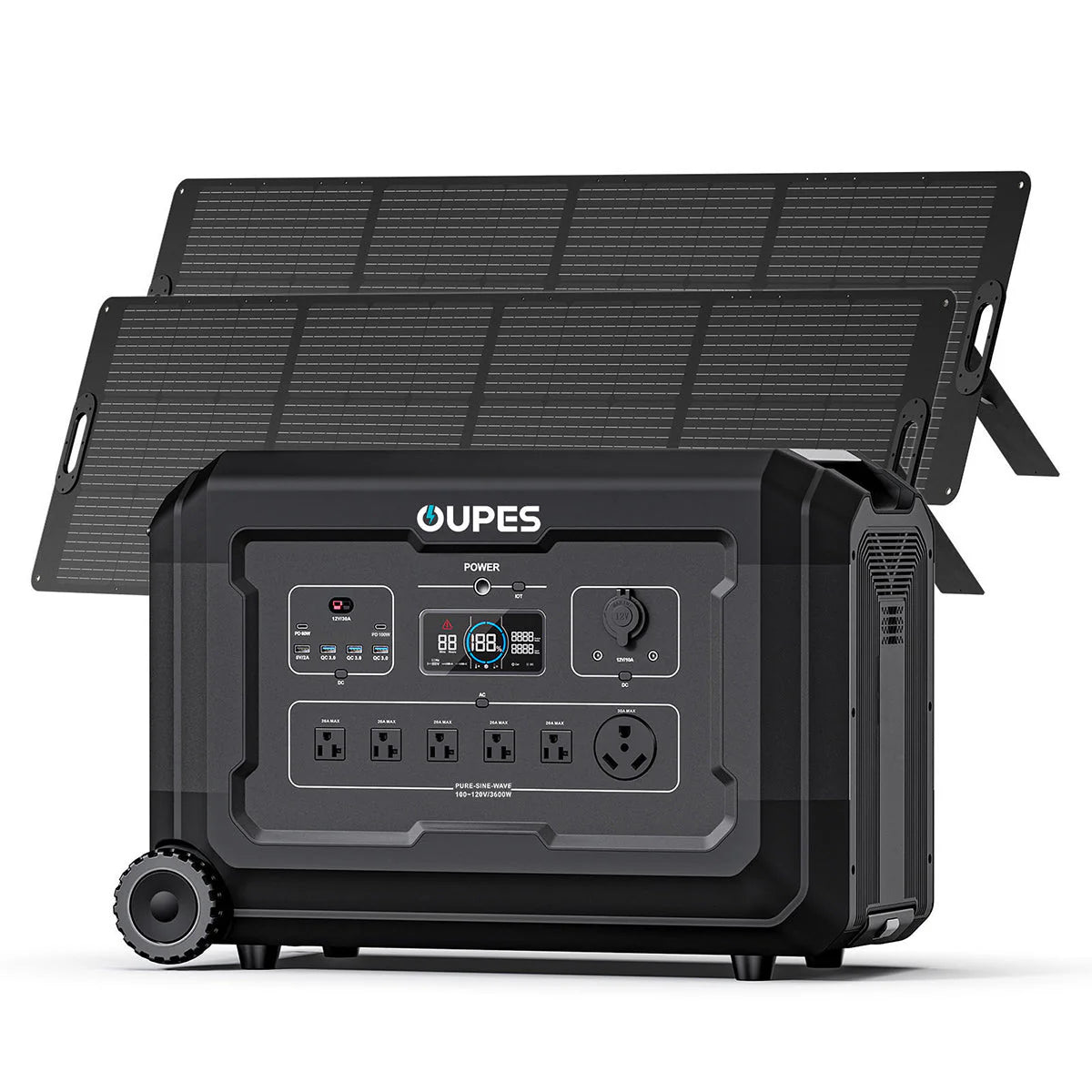
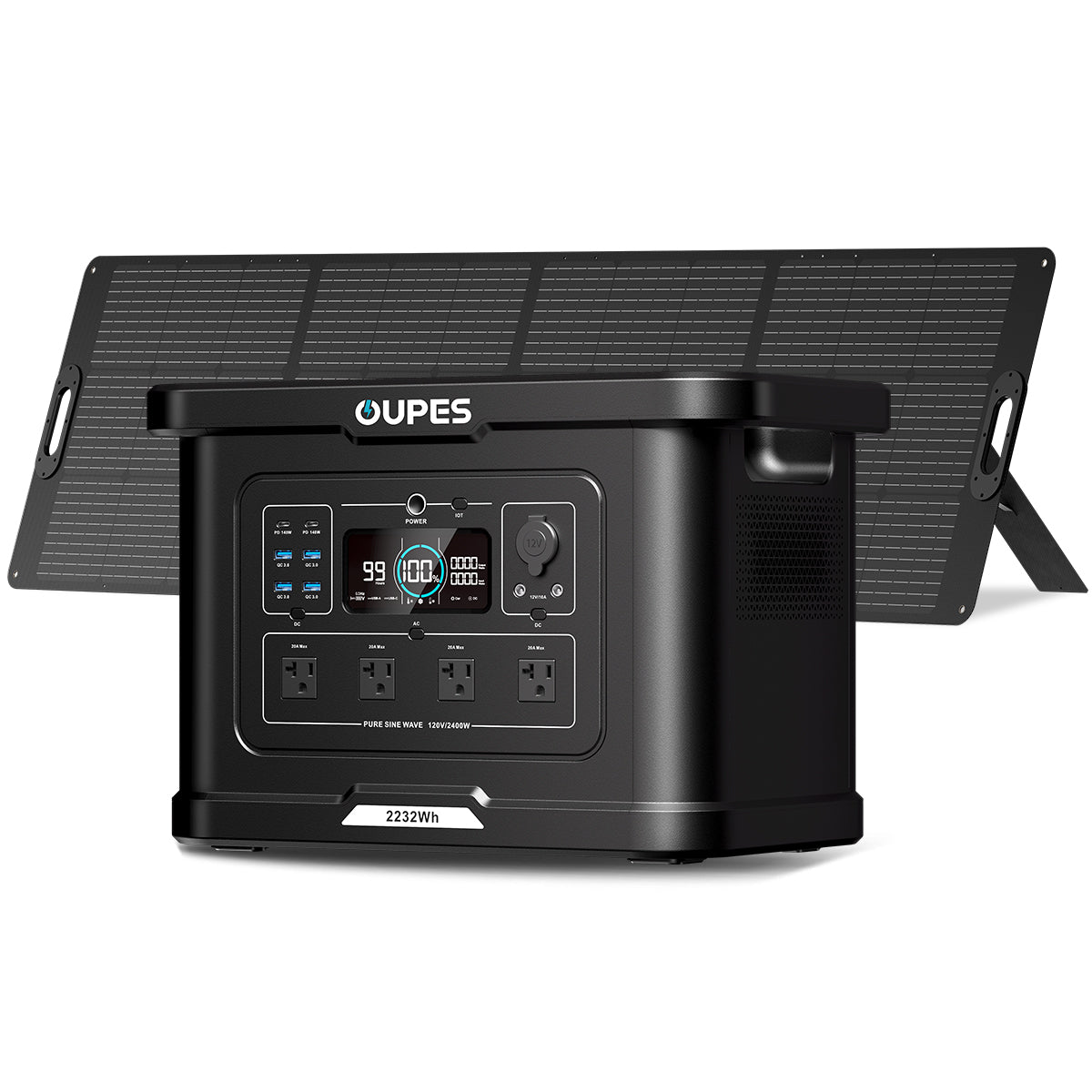
This is the "sweet spot" for most outdoor enthusiasts. If you have a vehicle right next to your campsite, weight is less of a concern. A mid-sized station allows you to graduate to luxury camping. You can power a 12V Dometic or ARB fridge constantly, run a CPAP machine overnight, grind fresh coffee beans, and keep drone and camera batteries topped off. Combined with a 200W solar panel, this setup can keep you off-grid indefinitely.
The RV Boondocker & Glamping Host (2000Wh+)
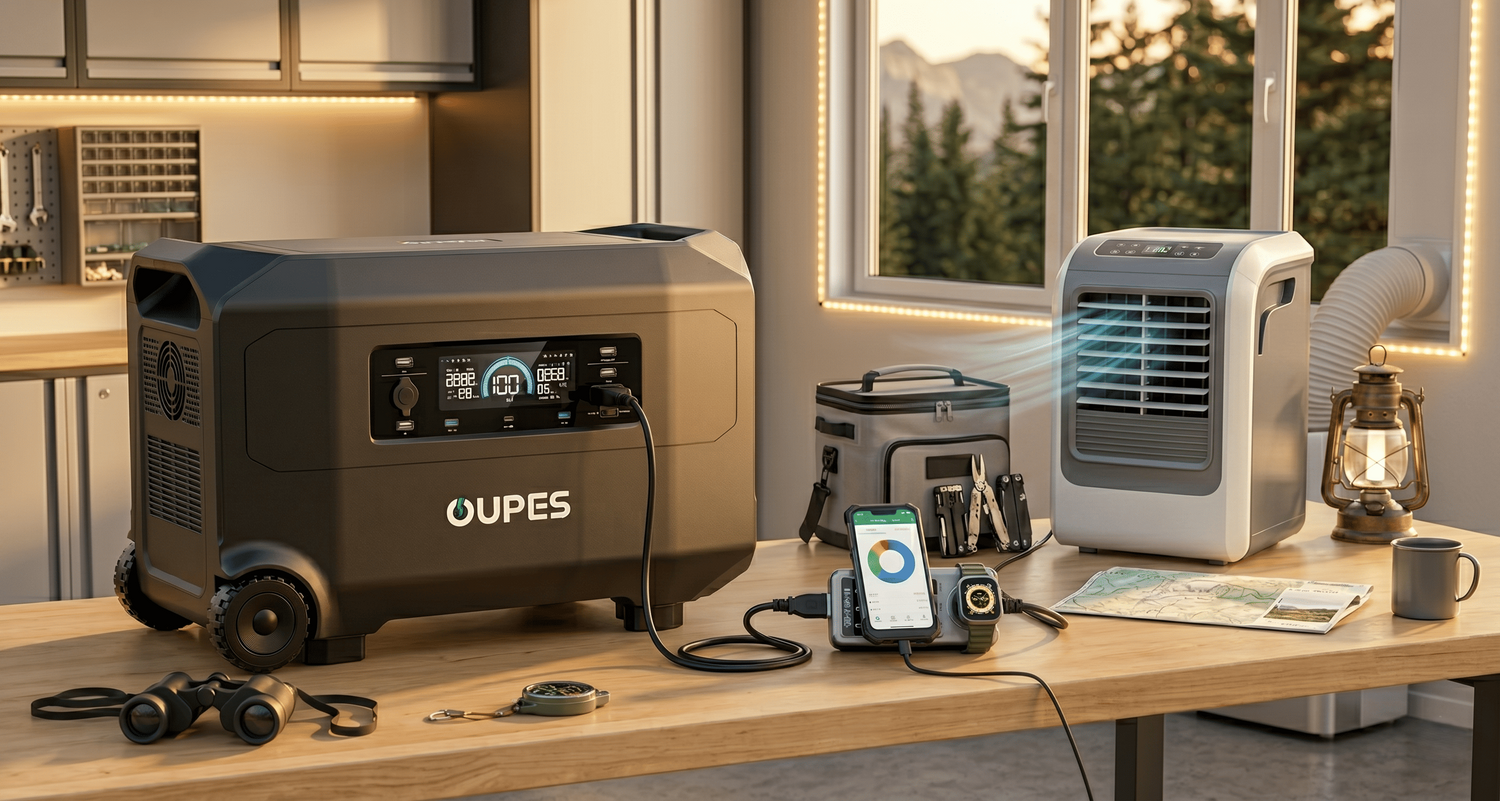
If you are towing a travel trailer into Bureau of Land Management (BLM) territory without hookups, or setting up a large glamping canvas tent, you need serious power. Units with capacities over 2000Wh and outputs over 2000W act as true generator replacements. They can run high-draw appliances like microwaves, hair dryers, induction cooktops, and even small window air conditioning units for brief periods.
6. Why OUPES is the Premier Choice for Off-Grid Reliability
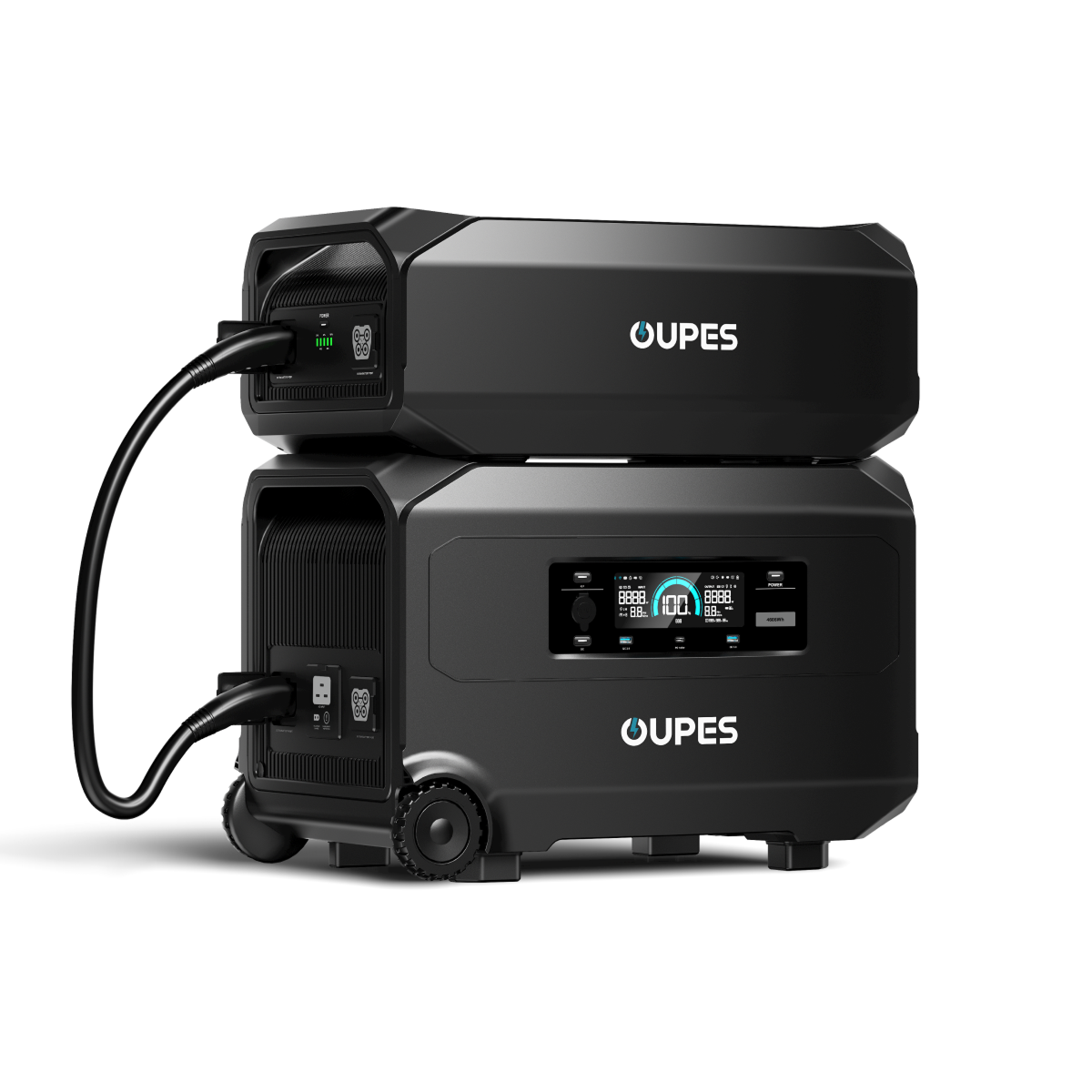
When you are miles away from civilization, equipment failure is not an option. You need a brand built strictly around reliability, safety, and longevity. This is exactly why an OUPES portable power station stands out as an elite choice for campers.
First and foremost, OUPES refuses to compromise on battery chemistry; their robust lineup is built exclusively around premium, EV-grade LiFePO4 battery cells. This guarantees that your investment will endure over 3,500 life cycles, serving you faithfully across thousands of campouts. From a safety perspective, mom and dad can sleep soundly knowing the power station sitting inside their family tent is inherently protected against overheating and thermal hazards.
Secondly, OUPES integrates state-of-the-art Battery Management Systems (BMS) into every unit. This intelligent internal computer acts as a vigilant guardian, constantly monitoring individual cell voltage, current, and temperature. If you accidentally plug in a camping heater that draws too much power, the OUPES BMS will instantly and safely shut off the output port to protect the machine, rather than blowing a fuse or causing permanent damage.
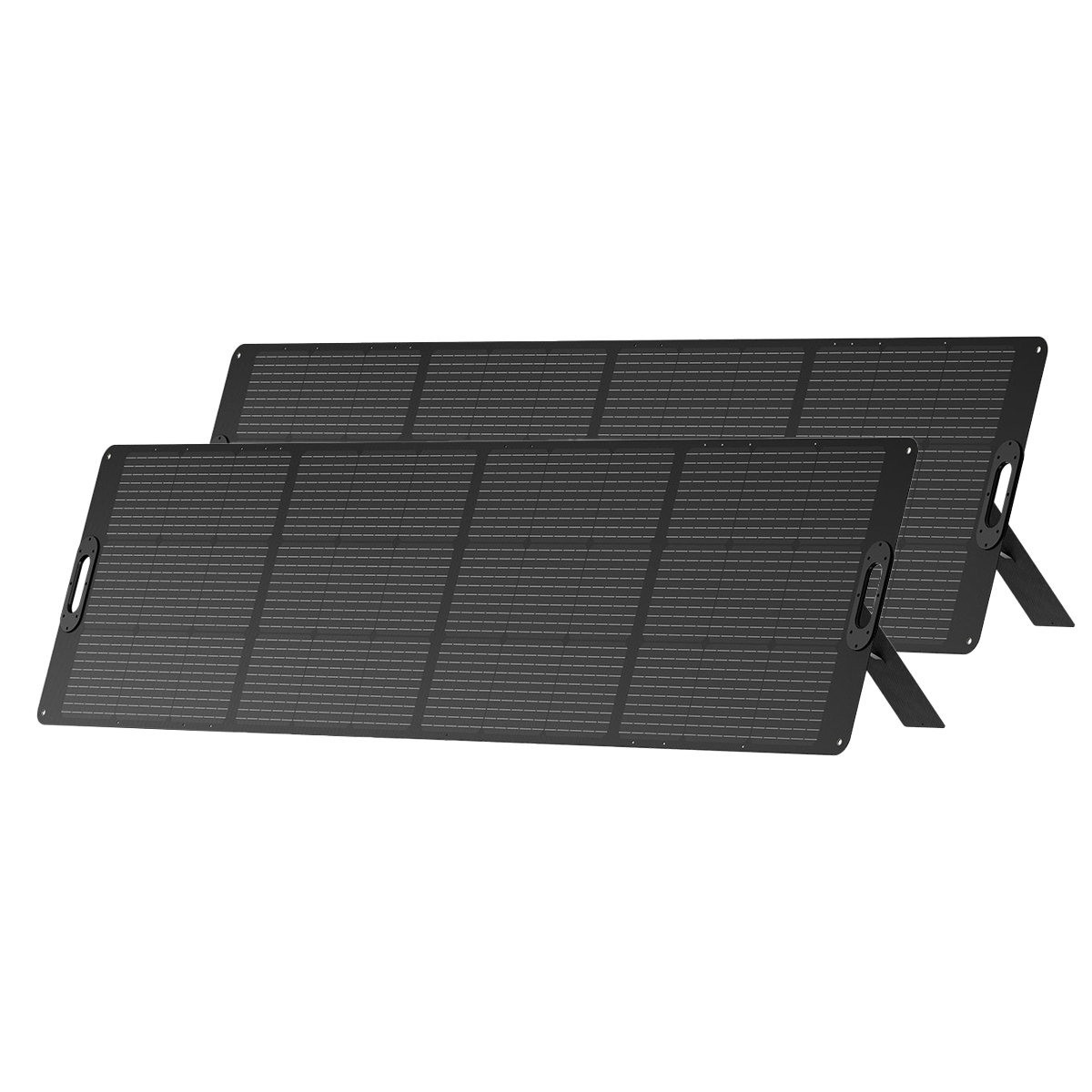
Finally, OUPES power stations are designed with the modern camper's connectivity in mind. They feature a generous array of output ports—including high-speed USB-C Power Delivery (PD) for fast-charging modern laptops without needing a bulky AC adapter, standard AC pure sine wave outlets, and regulated 12V carports crucial for running portable camping fridges without low-voltage cutoffs. Coupled with their highly efficient built-in MPPT controllers, pairing an OUPES unit with their portable solar panels ensures you can harness the sun rapidly and effectively, keeping your campsite powered no matter how long you decide to stay off the grid.
7. Pro Tips: Maximizing Battery Life in the Wilderness
Even with the best technology, operator habits dictate how efficiently your power station performs. Follow these expert tips while at the campsite:
- Manage the Heat: While LiFePO4 batteries are incredibly stable, extreme heat drastically reduces operating efficiency. Never leave your power station sitting in direct summer sunlight or inside a baking, closed car. Always keep the unit in the shade, under a picnic table, or inside a well-ventilated tent.
- Utilize Pass-Through Charging: High-quality stations allow you to charge the battery via solar panels while simultaneously powering your devices. During peak sunlight hours (10 AM to 2 PM), plug your heavy-draw items in. The solar panels will run the devices directly, saving your battery's stored energy for the night.
- Use DC Instead of AC When Possible: Turning on the AC inverter consumes baseline power (often 10W to 20W) just to keep the circuitry active. If you can charge your phone via a USB port (DC) or run your fridge via the 12V cigarette lighter port (DC), do it. Avoid using an AC wall plug adapter if a DC option is available, as it eliminates the energy loss from the inversion process.
- Keep It Topped Off: Before leaving your house for a camping trip, plug the unit into a wall outlet to ensure it is at 100%. If you only camp a few times a year, store the unit indoors in a dry place with the battery level around 60% to 80%, and recharge it every 3 to 6 months to maintain optimal cell health.
8. Frequently Asked Questions (FAQ)
Is it safe to use a portable power station inside my tent?
Yes, absolutely. Unlike gas-powered generators, portable power stations run entirely on battery power. There is no internal combustion, zero carbon monoxide emissions, and virtually no noise. They are perfectly safe to keep inside your tent right next to your sleeping bag, making them ideal for running CPAP machines or overnight fans.
Can an OUPES portable power station get wet in the rain?
While well-built power stations have durable, rugged casings designed for outdoor environments, they are not completely waterproof. They have cooling vents and open electrical ports. You must protect your power station from direct rain, snow, or sitting in puddles. Always cover it or move it inside your tent or vehicle during inclement weather.
How long does it take to recharge a power station with solar panels?
Recharge time depends strictly on the capacity of the battery (Wh), the total wattage of the solar panels, and the weather conditions. For example, if you have a 1000Wh battery and a 200W solar panel operating in perfect, cloudless midday sun, it will take approximately 5.5 to 6 hours to fully recharge (1000Wh / 200W = 5 hours, plus 10-20% time added for efficiency losses).
What does a "Regulated 12V Port" mean, and why do I need it for camping?
Many campers use 12V portable refrigerators (like a Dometic). As a standard lithium battery drains, its internal voltage slowly drops. If a power station's 12V carport is "unregulated," the voltage sent to the fridge will also drop. Most high-end fridges have a safety feature that turns them off if the voltage gets too low to protect your vehicle's car battery. A "regulated" 12V port, which is standard on quality units, uses internal circuitry to ensure a constant, steady 12V output from 100% battery down to 1%, guaranteeing your fridge won't randomly shut off and spoil your food.
Can a power station jump-start my car if my battery dies at the campsite?
Generally, no. Portable power stations are designed to provide a steady, lower-amperage output over a long period. Jump-starting a car engine requires an instant, massive burst of hundreds of amps, which would trigger the power station's Battery Management System to shut down for safety. However, some models offer a slow-trickle charge cable that can plug into your car's cigarette lighter to slowly charge the car battery over several hours.

Leave a comment
This site is protected by hCaptcha and the hCaptcha Privacy Policy and Terms of Service apply.